KH
KH  FR
FR  AR
AR CN
CNCambodian Diplomat Advances EU Agricultural Trade Initiative to Supply Diaspora Markets
AKP Phnom Penh, October 5, 2026 --
A vision conceived in early 2025 to cultivate native Cambodian produce in Southeastern Europe for export across the European Union is progressing from pilot cultivation to commercial structuring, showcasing an active model of economic diplomacy.
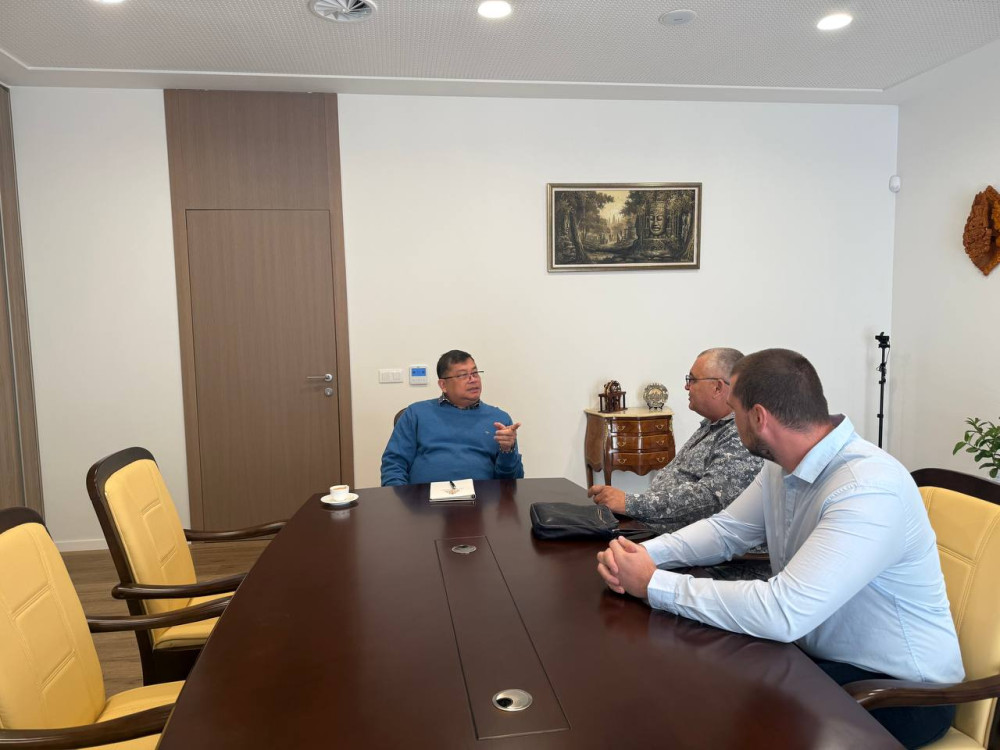
On Monday, Cambodia's Ambassador to the Republic of Bulgaria received an agricultural engineer and longtime colleague who presented the initial yield of water spinach or better known as morning glory (Ipomoea aquatica) grown locally in Bulgaria. The milestone follows consultations held between the two early last year regarding the adaptation of Cambodian crops to European agricultural conditions.
The cultivation trials extend beyond water spinach to evaluate a broader variety of indigenous Cambodian vegetables tailored to the culinary demands of the Asian diaspora across Europe. Beyond confirming crop viability, current assessments focus on maintaining quality standards, securing target yields, and integrating production into established regional supply networks.
Leveraging Bulgaria's agricultural capacity and strategic access within the EU single market, the initiative seeks to bridge domestic European production with market demand in countries like France, home to significant Cambodian and Southeast Asian communities. Under this framework, Bulgaria is positioned to serve as a key production and distribution hub for Cambodian specialty produce across the region.
To advance the project into commercial implementation, a formal delegation will meet with Cambodian enterprise leaders in France on Oct. 14, 2026.
Discussions will address consumer demand parameters, high-potential crop selection, yield specifications, packaging standards, cold-chain logistics, and long-term procurement agreements.
The initiative highlights a shift in diplomatic engagement toward direct market facilitation, prioritising trade generation, cross-border business networking, and tangible economic output alongside traditional state-level bilateral relations.

By K. Rithy Reak