KH
KH  FR
FR  AR
AR CN
CNEditorial: RGC Steps Up Crackdown on Online Scams, Records Significant Results
AKP Phnom Penh, August 25, 2026 --
Online scams have continued to claim victims in Cambodia and around the world, with criminal networks increasingly using sophisticated and organised operations to defraud people, steal money and obtain sensitive personal information.
Although many of these criminal groups primarily target foreigners, their presence in Cambodia has posed serious challenges to the country’s security, economy and international reputation. The Royal Government of Cambodia (RGC), however, has never ignored the issue and has taken increasingly firm measures to eradicate technology-facilitated fraud from the Kingdom.
Upon learning that criminal groups were using Cambodia as a base for online scam operations, Samdech Moha Borvor Thipadei Hun Manet, Prime Minister of the Kingdom of Cambodia, issued strict directives to the Ministry of Interior, relevant ministries and institutions, and capital and provincial administrations to completely dismantle such operations and take legal action against those involved.
A major step in these efforts was the enactment of the Law on Combating Technology-Enabled Scams on April 6, 2026. The law covers technology-based fraud committed through technological systems or involving the use of technology as a means to commit offences. Depending on the severity of an offence and the damage caused, offenders may face penalties of up to life imprisonment, the most severe punishment under Cambodian law.
The law demonstrates the RGC’s determination to strengthen the legal framework for combating online scams and prevent technology-based fraud from taking root in Cambodia.
On April 3, 2026, H.E. Deputy Prime Minister Koeut Rith, Minister of Justice, said the law marked a new step in the RGC’s fight against online scams, with two key objectives: enhancing the effectiveness of nationwide crackdown operations and ensuring that technology-based scams do not return to Cambodia.
Technology-facilitated fraud is a form of organised crime involving structured networks that exploit the internet and modern technology to steal money, passwords, bank account information and other sensitive data from victims.
Such networks often employ supervisors to manage fraudulent activities and systematically compile victims’ information. Common schemes include fake cryptocurrency investment opportunities, online romance scams and illegal online loan applications, targeting victims both inside and outside Cambodia.
To address the problem, Prime Minister Hun Manet has repeatedly demonstrated strong resolve, directing relevant ministries, institutions and sub-national administrations to dismantle scam operations and bring perpetrators and accomplices to justice.
The RGC has also placed the fight against technology-based fraud high on its political agenda and launched a nationwide campaign involving multiple authorities and stakeholders.
These efforts demonstrate Cambodia’s determination to address an issue of concern not only to the Kingdom but also to the region and the international community. They also contribute to restoring Cambodia’s national reputation and public confidence.
According to a report by the Secretariat of the Ad-hoc Commission for Combating Online Scams, crackdown operations conducted from July 2025 through July 31, 2026 involved the investigation and identification of 751 locations where offences were committed. Of these, 605 sites were sealed to prevent further criminal activities.
Authorities also investigated 195 licensed casino locations, resulting in the revocation of 20 casino licences and suspension of another 29 licences due to their involvement in technology-based fraud. A further 23 casinos whose licences had expired subsequently ceased operations.
During the same period, Cambodian authorities rescued and processed the repatriation of 21,666 foreign nationals from 38 nationalities, mainly from China, Vietnam, Pakistan, Indonesia, Bangladesh and India.
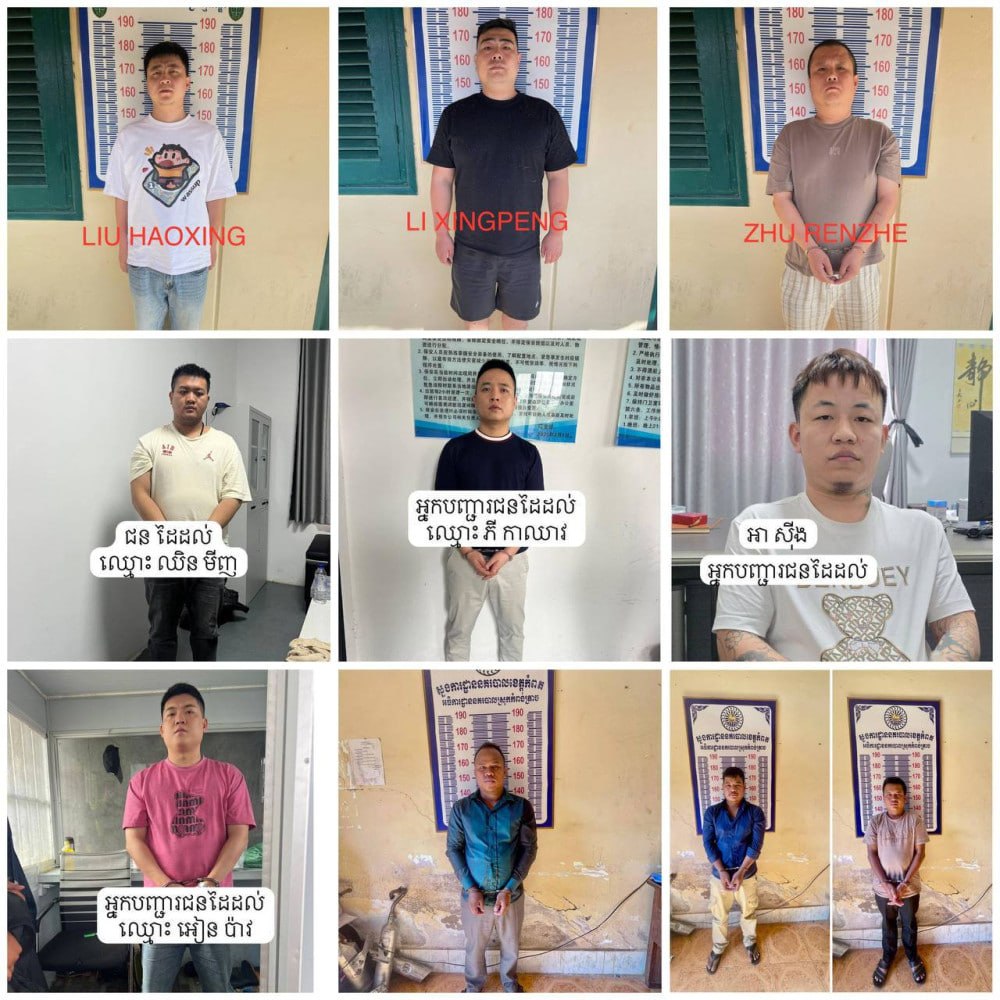
Competent authorities also prepared and referred 388 cases to the courts, involving 4,147 suspects from 27 nationalities, including alleged ringleaders and accomplices.
Despite these significant results, Cambodia has not relaxed its efforts. Criminal networks have increasingly adapted their methods, splitting into smaller groups and operating from guesthouses, hotels and dispersed locations to evade detection and law enforcement operations.
The Prime Minister has also used interviews with major international media outlets, including Reuters, AFP and Fox News, to reaffirm Cambodia’s commitment to eliminating online scams while addressing concerns over the country’s sovereignty and international reputation.
His observation that “black economy” technology-based scam networks are undermining Cambodia’s legitimate economy underscores the broader economic and social consequences of the criminal activities.
There is no doubt that Cambodia has consistently reaffirmed its commitment, both nationally and internationally, to eliminating online scams. The fight against technology-facilitated fraud has become a key policy priority of the RGC, aimed ultimately at protecting the people, strengthening public security and safeguarding Cambodia’s reputation.
At the same time, the complexity and transnational nature of these criminal networks mean that no country can eradicate online scams alone. Effective action requires stronger cross-border cooperation, information sharing and coordinated law enforcement among countries.
In this spirit, Cambodia will host the International Conference on Combating Technology-Facilitated Fraud in Phnom Penh on Sept. 23-24, 2026, with more than 30 countries and international organisations invited to participate.
The conference will be held under the theme “Acting Together Towards Breaking the Chain and Eradication of Online Scams,” underscoring Cambodia’s intention to contribute actively to the international effort against technology-facilitated fraud.
The organisation of the conference further demonstrates Cambodia’s willingness to cooperate with the international community in addressing this shared challenge.
In summary, the RGC’s ongoing nationwide crackdown, backed by stronger legislation, law enforcement measures and international cooperation, has already produced significant results. While considerable challenges remain, Cambodia is continuing its efforts with determination to dismantle technology-based fraud networks and prevent them from establishing a foothold in the country.
Protecting the well-being of the people, safeguarding Cambodia’s national reputation and supporting sustainable economic development remain among the key objectives guiding the Royal Government’s efforts to eradicate online scams.


AKP