KH
KH  FR
FR  AR
AR CN
CNConservation NGO and Private Sector Join Forces to Conserve the Last Remaining Sarus Crane and Improve Local Livelihood
AKP Phnom Penh, January 09, 2025 --
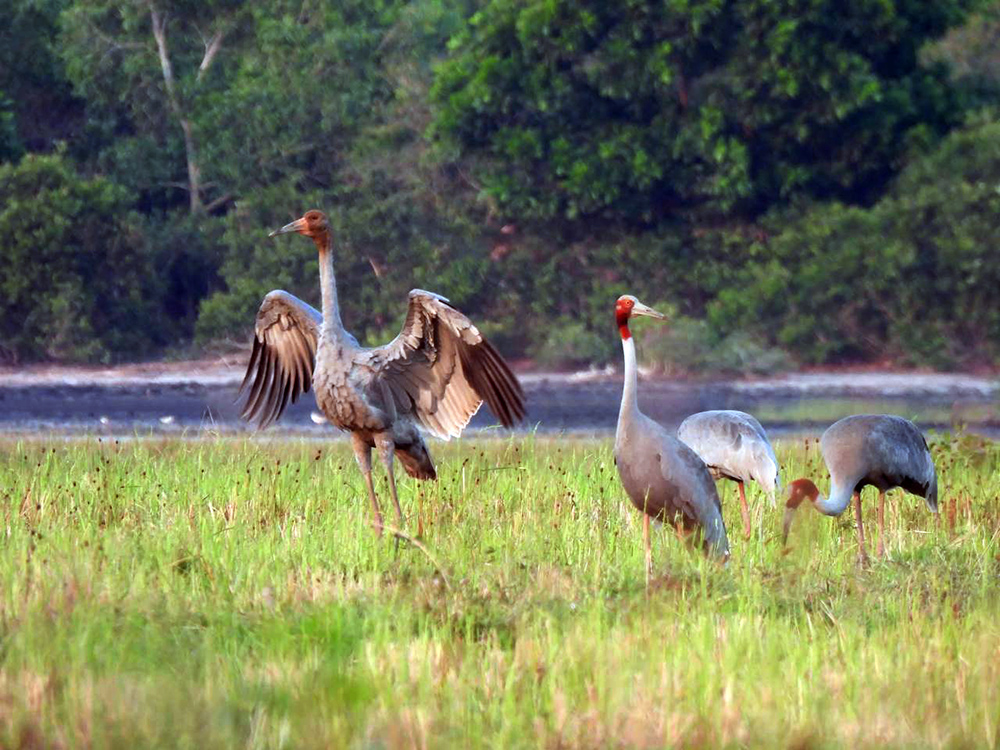
Sarus Crane (Antigone Antigone sharpii) is present in Indochina and is listed as a vulnerable species in the IUCN Red List. Refer to the 2023 Sarus crane census result, only 180 birds have been recorded.
In the last ten years, the number of Sarus Cranes has declined drastically due to the high mortality rate and lower nesting success, noted the NatureLife Cambodia in a media release issued on Jan. 8
According the source, the additional threats include deteriorating habitat conditions, nesting disturbance, poisoning caused by agricultural chemical pesticide use, lack of food, hunting, change of water regime, and also climate change factors.
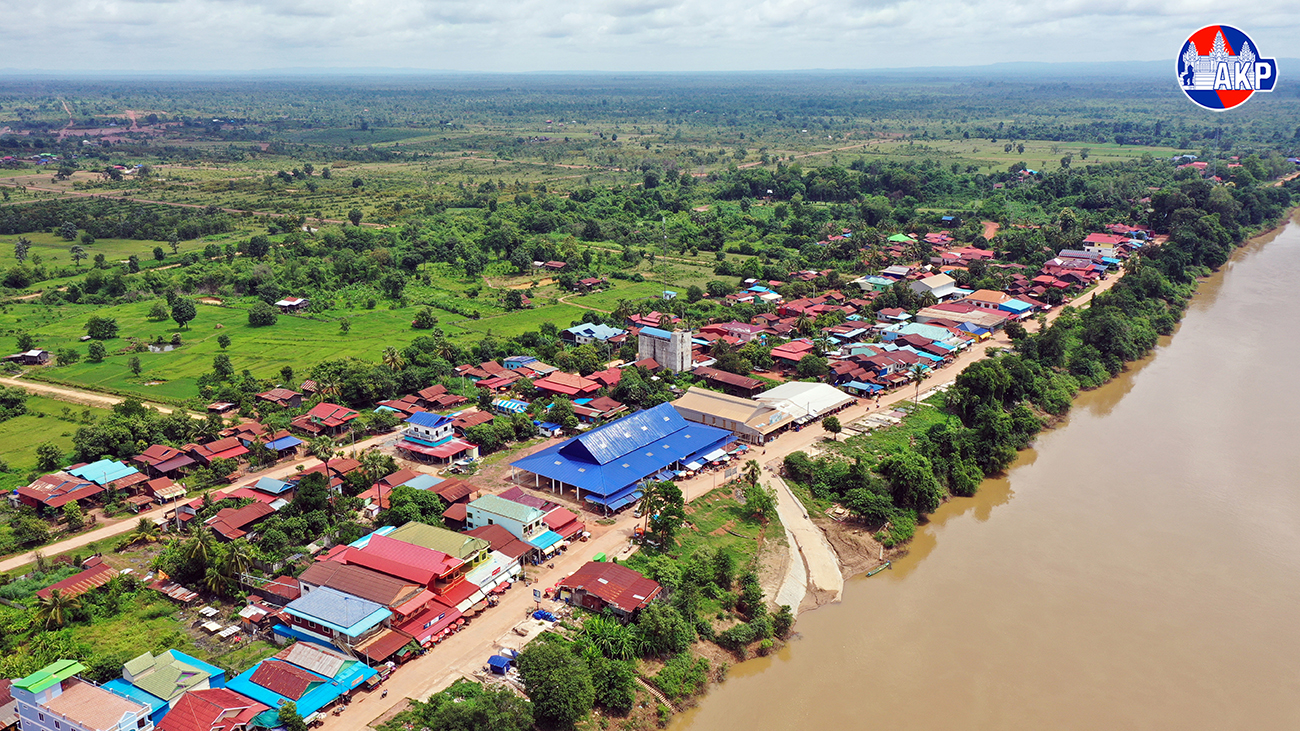
Anlung Pring, located in Kampong Trach district, Kampot Province, is a vital wetland that supports more than 35 percent of total Sarus Crane population during its non-breeding season from December to May each year. However, the Sarus Crane faces significant threats in and around the Anlung Pring Protected Landscape, including habitat conversion, food scarcity, and poisoning from overused pesticide.
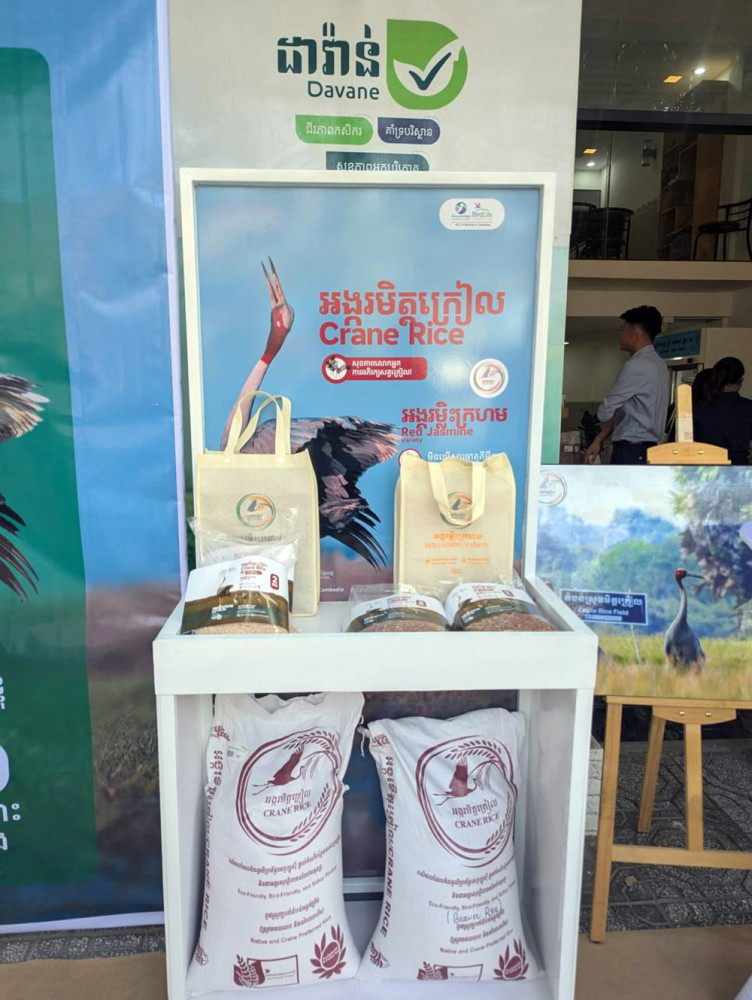
To address these challenges, the Ministry of Environment, in collaboration with NatureLife Cambodia, launched the Crane Rice initiative in 2019.
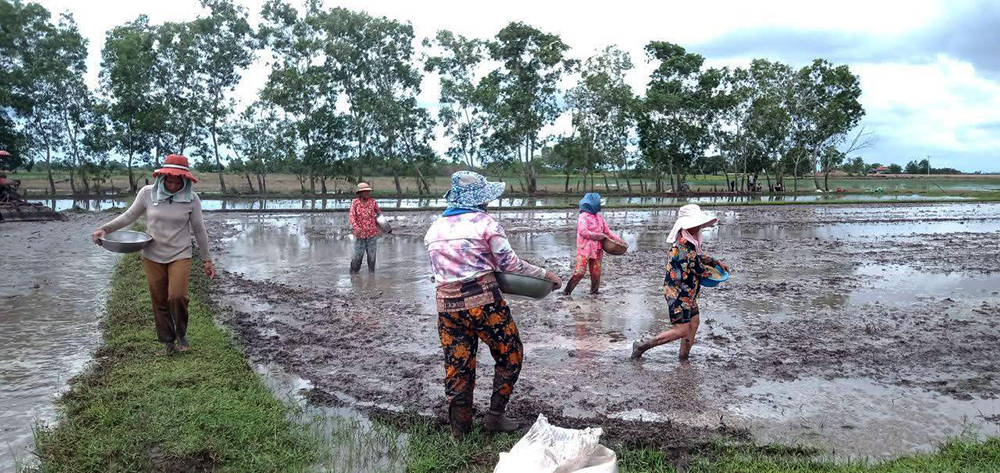
Guided by 12 key criteria, this programme engages farmers with rice fields near Anlung Pring to support both the cranes and local livelihoods. The initiative promotes the cultivation of native, crane-preferred rice varieties without the use of chemical fertilisers or herbicides.
Farmers leave 5 to 50 percent of their rice yield in the fields as supplemental food for the Sarus Crane during its non-breeding period. On average, Crane Rice farmers collectively produce about 300 tonnes of rice annually, balancing ecological conservation with sustainable agriculture.
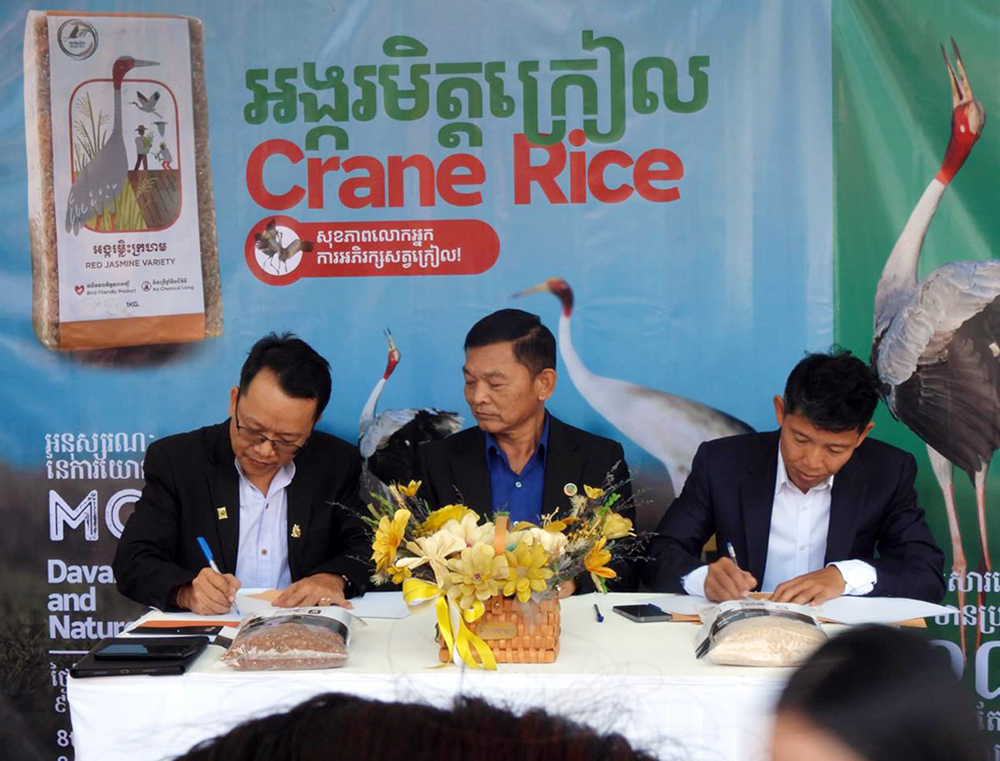
“Crane Rice is a nature-based solution initiative dedicated to conserving the Sarus Crane from extinction by fostering strong community support,” said Mr. Bou Vorsak CEO of NatureLife Cambodia. “Over the past four years, the number of Crane Rice farmers has grown from 40 to 120 households, and the safe habitat has expanded from 219 hectares to 386 hectares. The annual increase in Crane Rice yield is a testament to the program’s success. That is why we are thrilled to collaborate with Davane Store to expand Crane Rice markets nationwide through today’s MoU signing.”
“Sarus Crane is a symbol of our nation’s pride, and Crane Rice represents a business model with a mission—to preserve this majestic species. Four years ago, this was just a hope; but today, we are proud of the partnership with NatureLife Cambodia. A hundred years from now, we want our grandchildren to marvel at the Sarus Crane as we do today. Crane Rice is a fine quality red jasmine that stands for consumers, farmers, and nature— which are the three guiding principles of Davane," said Mr. Chheng Makara, CEO of Davane Store.
“With the support of Davane Store, we hope to inspire more people to consume Crane Rice,” said Mrs. Cheng Sovanna, chief of the Crane Rice Farmers Group. “Our villagers are committed to practicing sustainable agricultural techniques that benefit the Sarus Crane, a source of great pride for our community. We deeply thank all Crane Rice consumers—your choice not only promotes good health but also helps improve our livelihoods and protect the Sarus Crane for our next generations.”
By Phal Sophanith