KH
KH  FR
FR  AR
AR CN
CNCambodia Expands Digital Evidence Sharing in Global Crackdown on Tech Fraud
AKP Phnom Penh, September 23, 2026—
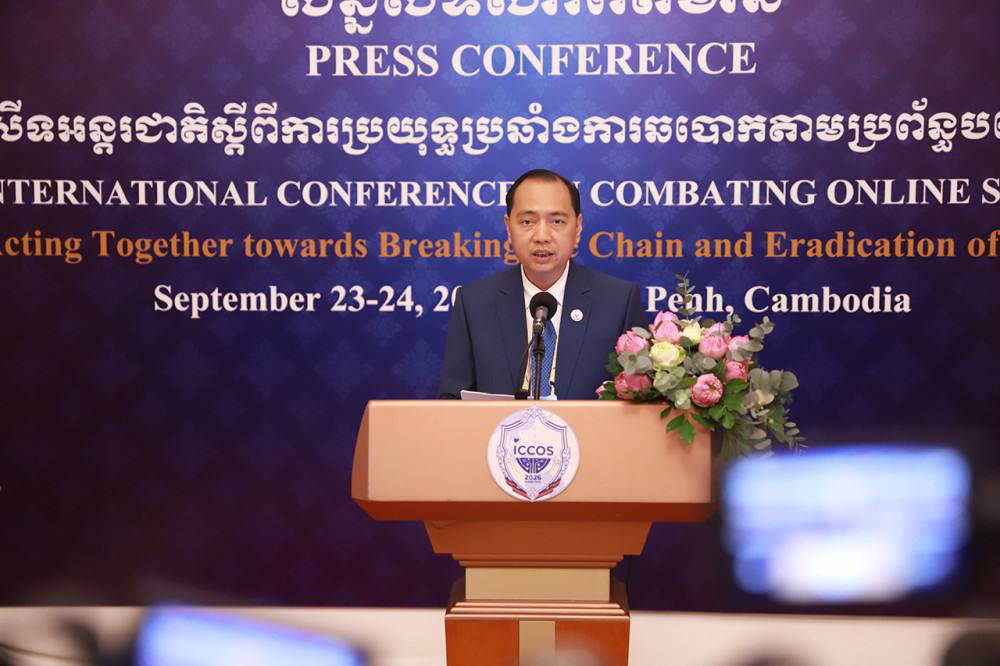
Cambodian authorities have stepped up international cooperation with partner countries and international organisations to exchange information, conduct investigations, and analyse digital evidence, ensuring criminals cannot exploit jurisdictional loopholes to evade legal responsibility, a senior official said Wednesday.
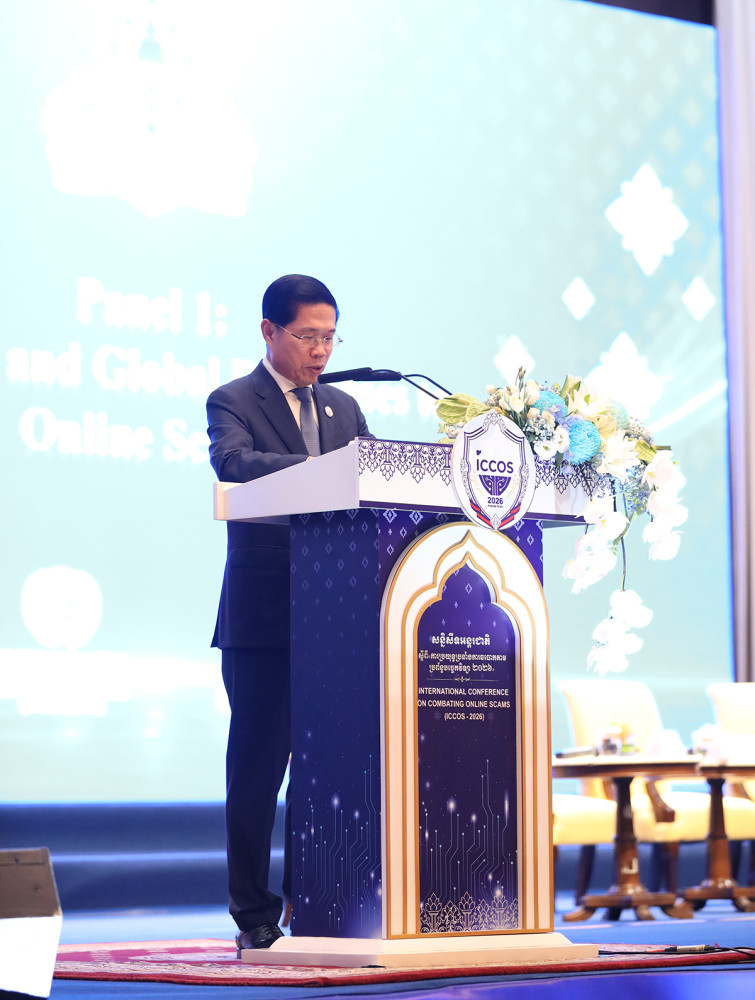
Speaking at the first session of the International Conference on Countering Online Scams under the theme "Regional and Global Responses to Online Scams" this afternoon, Secretary of State for the Ministry of Interior H.E. Gen. Keo Vanthan emphasised the critical role of cross-border law enforcement.
He noted that the international community has established key legal mechanisms to bolster cooperation, highlighting the United Nations Convention against Cybercrime adopted in 2024 to supplement the 2000 Convention against Transnational Organised Crime. This treaty mandates member states to establish national legal frameworks to prevent and suppress cyber offenses while strengthening international enforcement collaboration.
Cambodia, as a signatory, took a major step forward by enacting a national legal framework on combating online scams in April 2026. According to H.E. Keo Vanthan, the law addresses former legal gaps, enhances multilateral cooperation, and strengthens anti-money laundering mechanisms linked to online scam operations.
He warned that cyber scam operations rarely exist in isolation, often creating a complex ecosystem of transnational crime involving human trafficking, forced labour, drug trafficking, and money laundering. Criminal enterprises frequently set up operations in one country, target victims in another, utilise digital infrastructure in a third, traffic labour from a fourth, and move illicit funds across multiple jurisdictions—making it impossible for any single nation to dismantle these networks alone.
"Our initial response focused on protecting victims through public awareness and prevention, but these measures alone could not stop cybercrime from expanding," H.E. Keo Vanthan said. "We have shifted from individual self-protection to joint action aimed at destroying these criminal networks to ensure security and safety for our people and society."
He concluded that no single country or institution can address cyber scams effectively on its own, stressing that the conference—bringing together representatives from government bodies, international organisations, and the private sector—serves as a pivotal platform to establish priority strategies for future combat against online scams.


By K. Rithy Reak