KH
KH  FR
FR  AR
AR CN
CNCambodian Scholar Calls for Stronger Security Cooperation at SCO Media and Think Tank Summit
AKP Bishkek, July 27, 2026 --
As Cambodia and the region face various security challenges, a Cambodian scholar has called for stronger security cooperation to safeguard regional peace and stability.
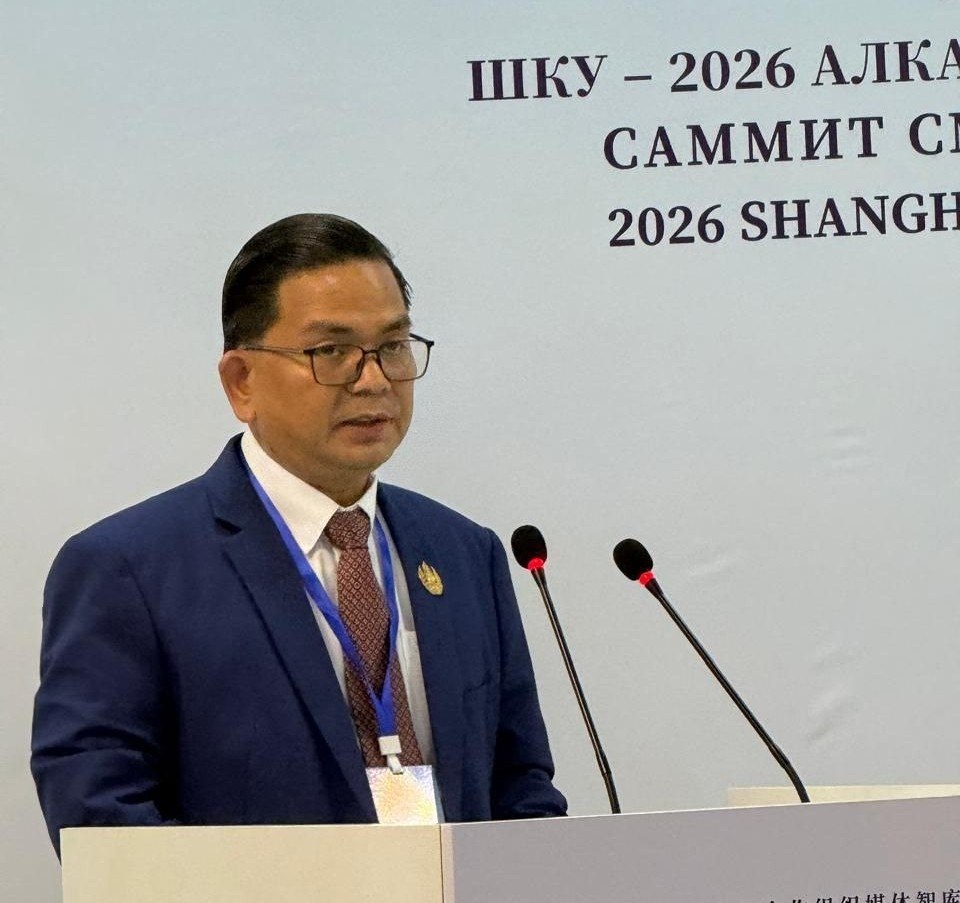
The call was made by Dr. Kin Phea, Director General of the International Relations Institute of Cambodia, during the 2026 Shanghai Cooperation Organisation (SCO) Media and Think Tank Summit in Bishkek, Kyrgyzstan, on Monday afternoon.
Speaking under the theme “The New Era Significance of the Shanghai Spirit: From Value Consensus to Cooperative Practice,” Dr. Kin Phea called for deeper regional security cooperation to address increasingly complex global challenges.
He highlighted the SCO's remarkable achievements over the past 25 years, describing the organisation as one of the world's most influential regional platforms for promoting peace, security, and sustainable development.
Dr. Kin Phea noted that the SCO’s success has been guided by the Shanghai Spirit, which emphasises mutual trust, mutual benefit, equality, consultation, respect for cultural diversity, and the pursuit of common development. He said these principles demonstrate that lasting security is best achieved through dialogue, partnership, and shared responsibility rather than confrontation.
Regarding the current regional and global security challenges, Dr. Kin Phea pointed to the growing threats posed by terrorism, violent extremism, transnational crime, cybercrime, climate change, and pandemics. He stressed that such challenges transcend national borders and require stronger multilateral cooperation, as no country can effectively confront them alone.
Dr. Kin Phea also acknowledged China’s significant contribution to the development of the SCO, highlighting its support for multilateralism, regional dialogue, capacity building, and initiatives such as the Global Security Initiative. He noted that the SCO has made important progress in strengthening regional resilience through practical cooperation in counterterrorism, intelligence sharing, border security, law enforcement, and efforts to combat transnational crime.
Reflecting Cambodia’s position, Dr. Kin Phea reaffirmed that sustainable security must be grounded in the purposes and principles of the United Nations Charter, international law, respect for national sovereignty, and the peaceful settlement of disputes. He emphasised that these principles remain the cornerstone of Cambodia’s foreign policy.
Drawing on Cambodia’s own experience, he noted that the country has transformed from a conflict-affected nation into an active contributor to international peace and security. Cambodia continues to support United Nations peacekeeping operations, humanitarian demining, disaster relief, and preventive diplomacy, while also promoting ASEAN centrality and encouraging closer cooperation among the SCO, ASEAN, and the United Nations.
Looking ahead, Dr. Kin Phea outlined three key priorities for strengthening regional security cooperation. These include enhancing collaboration to address emerging non-traditional security threats; promoting and upholding a rules-based international order based on the purposes and principles of the United Nations Charter while strengthening coordination among the SCO, the United Nations, and regional organisations; and expanding cooperation among think tanks, research institutions, and the media to foster strategic trust, mutual understanding, and innovative policy solutions.
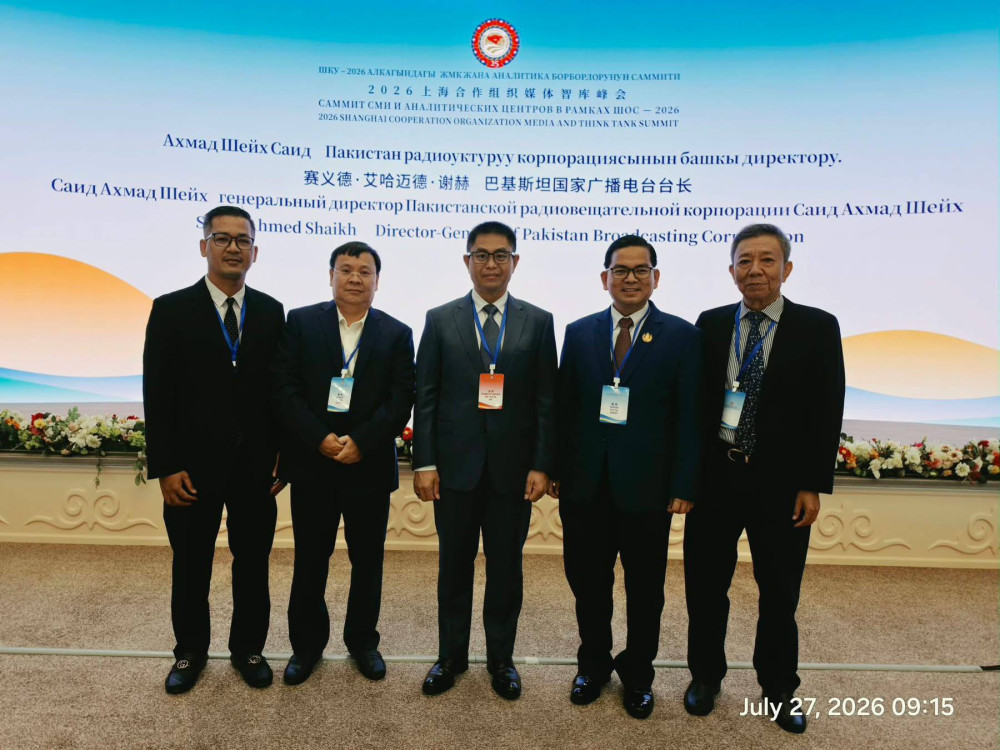
Around 260 representatives from nearly 150 mainstream media outlets, prominent think tanks, government departments of SCO countries, and the SCO Secretariat attended the 2026 SCO Media and Think Tank Summit. Among the international attendees is a five-member delegation from the Kingdom of Cambodia, led by H.E. Prak Thaveak Amida, Under Secretary of State at the Ministry of Information.
SCO was established on June 15, 2001, with its founding members being China, Russia, Kazakhstan, Kyrgyzstan, Tajikistan, and Uzbekistan, then India, Pakistan, Belarus jointed. The SCO has two observer states – Afghanistan and Mongolia and 14 dialogue partners, including Azerbaijan, Armenia, Cambodia, Nepal, Türkiye, Sri Lanka, Saudi Arabia, Egypt, Qatar, Bahrain, the Maldives, Myanmar, the United Arab Emirates, and Kuwait.
By Heng Panha