KH
KH  FR
FR  AR
AR CN
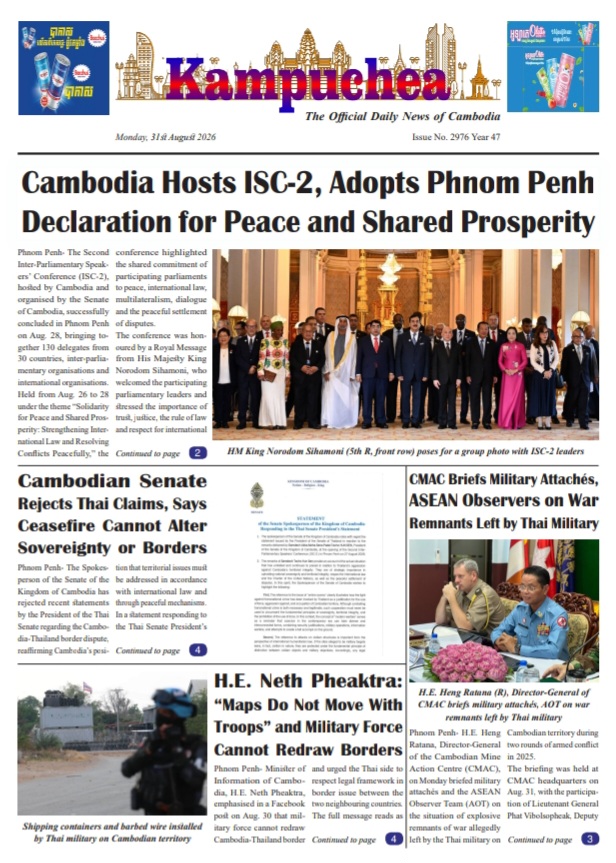
CNCambodia Strongly Protests against Thailand's Persistent Violations of Its Sovereignty and Territorial Integrity
AKP Phnom Penh, June 27, 2026 --
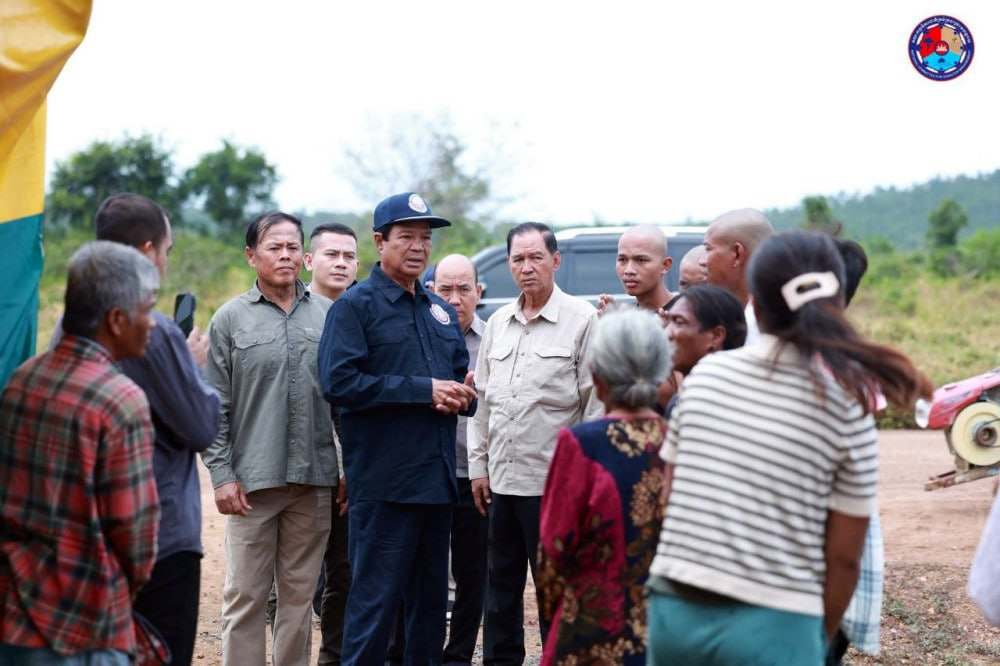
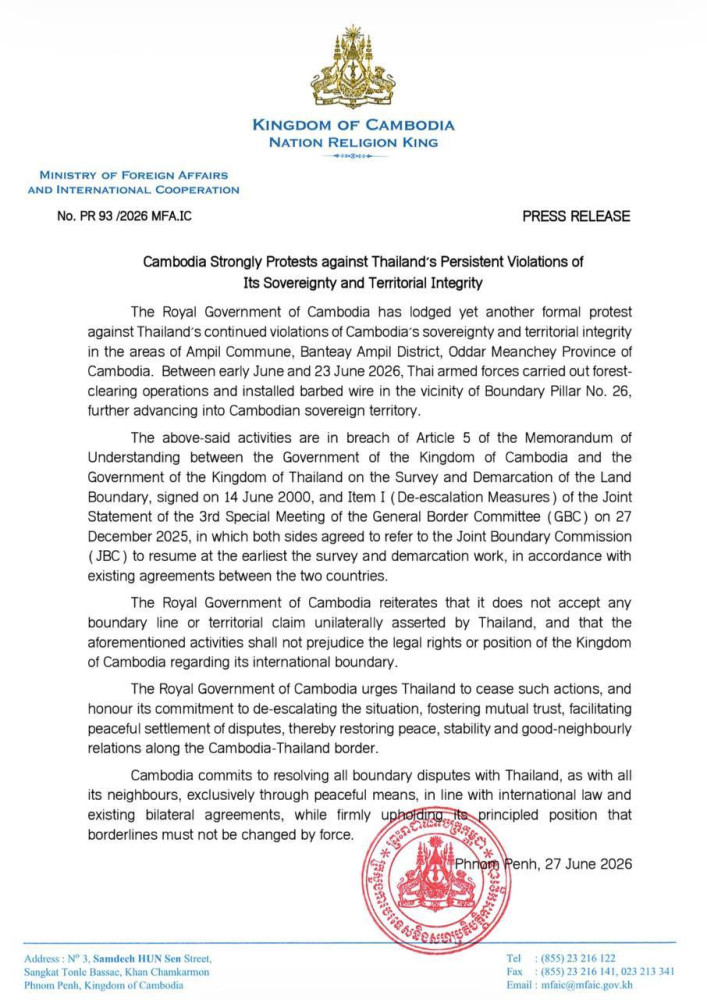
The Royal Government of Cambodia has lodged another formal protest against Thailand’s continued violations of Cambodia’s sovereignty and territorial integrity in Ampil commune, Banteay Ampil district, Oddar Meanchey province.
According to a press release issued by the Ministry of Foreign Affairs and International Cooperation on June 27, between early June and June 23, 2026, Thai armed forces carried out forest-clearing operations and installed barbed wire in the vicinity of Boundary Pillar No. 26, further advancing into Cambodian sovereign territory.
The above-said activities are in breach of Article 5 of the Memorandum of Understanding between the Government of the Kingdom of Cambodia and the Government of the Kingdom of Thailand on the Survey and Demarcation of the Land Boundary, signed on June 14, 2000, and Item I (De-escalation Measures) of the Joint Statement of the 3rd Special Meeting of the General Border Committee (GBC) on Dec. 27, 2025, in which both sides agreed to refer to the Joint Boundary Commission (JBC) to resume at the earliest the survey and demarcation work, in accordance with existing agreements between the two countries.
The Royal Government of Cambodia reiterated that it does not accept any boundary line or territorial claim unilaterally asserted by Thailand, and that the aforementioned activities shall not prejudice the legal rights or position of the Kingdom of Cambodia regarding its international boundary.
The Royal Government of Cambodia urged Thailand to cease such actions, and honour its commitment to de-escalating the situation, fostering mutual trust, facilitating peaceful settlement of disputes, thereby restoring peace, stability and good-neighbourly relations along the Cambodia-Thailand border.
Cambodia also reaffirmed its commitment to resolving all boundary disputes with Thailand, as with all its neighbours, exclusively through peaceful means, in line with international law and existing bilateral agreements, while firmly upholding its principled position that borderlines must not be changed by force.
By C. Nika