KH
KH  FR
FR  AR
AR CN
CNSOSORO Launches Francophone Digital Library Dedicated to Cambodia
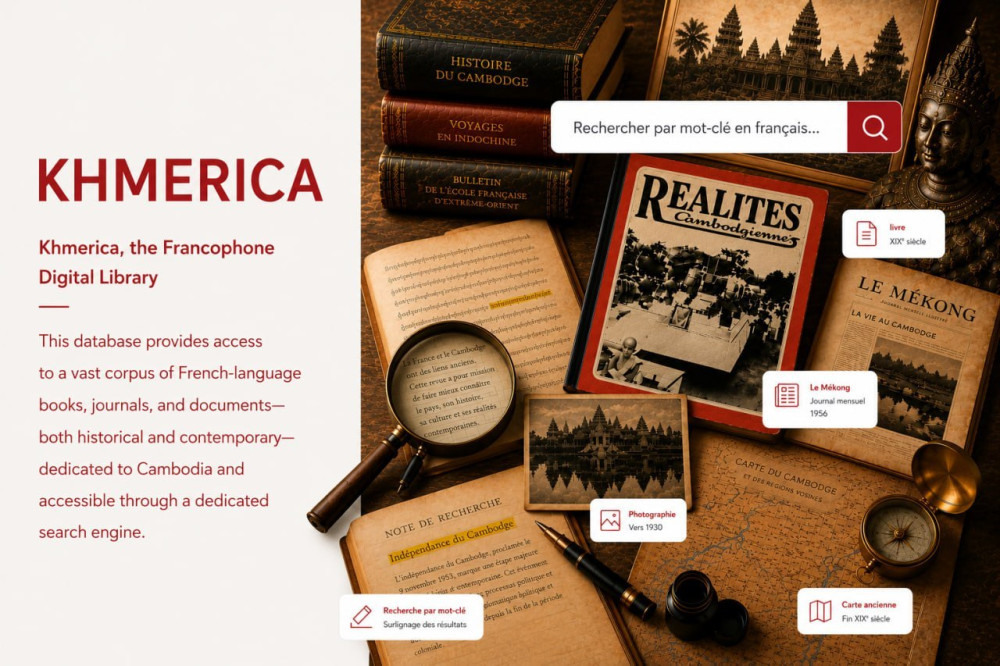
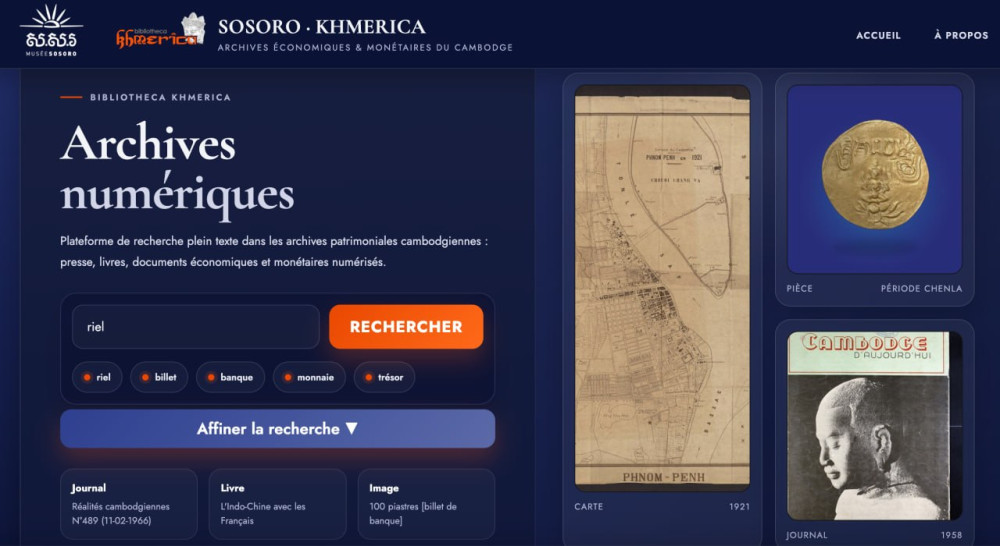
AKP Phnom Penh, June 16, 2026 -- The Preah Srey Içanavarman Museum of Economy and Money (SOSORO) launched on June 16 the Khmerica database, a French language digital library dedicated to Cambodia, hosted on the museum’s website and available at www.sosoro-khmerica.org.
Khmerica provides access to a growing collection of French-language books, journals, newspapers, and historical documents relating to Cambodia. Many of these resources are rare, out of print, or difficult to access elsewhere in digital form.
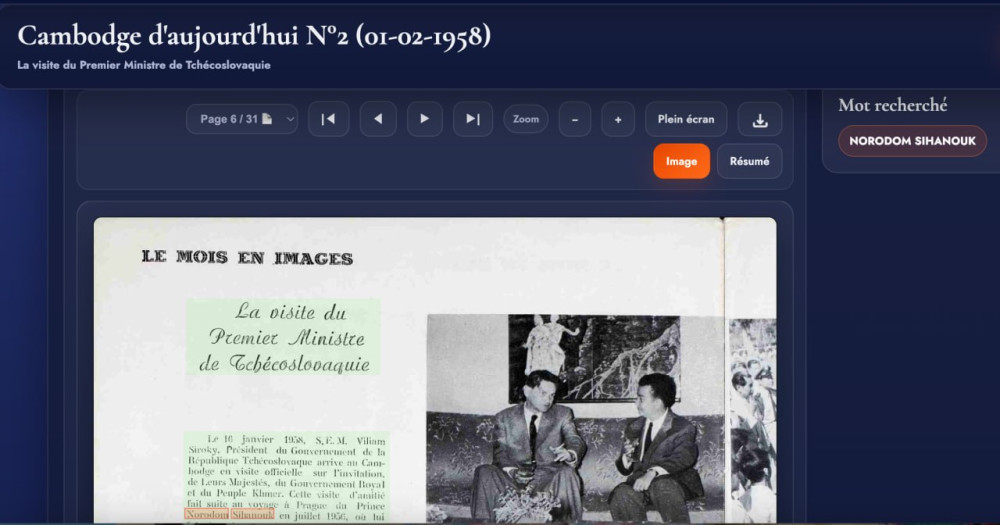
A key feature of Khmerica is its dedicated search engine, which allows users to search across the full text of thousands of digitised pages. Researchers, students, journalists, and the general public can quickly locate names, places, events, or topics of interest within a vast corpus of publications, making historical research more accessible.
Initially developed in 2005 with the support of French cooperation, then by the former head of the Priority Solidarity Fund for Enhancing Written Culture in Southeast Asia (acronym in French: FSP VALEASE), Mr. Jean-Jacques Donard, and finally the Organisation Internationale de la Francophonie (OIF), the Khmerica database became inaccessible to the public in 2020.
Since 2025, the National Bank of Cambodia’s SOSORO Museum has undertaken its preservation, enrichment, and improvement as part of its mission to promote Cambodia’s documentary heritage.
The first collections include more than twenty books and major French-language periodicals published in Phnom Penh since the 1950s, including Cambodge d’aujourd’hui, Réalités cambodgiennes, Cambodge, Le Mékong, Cambodge Soir, and Cambodge Soir Hebdo.
Additional content will be progressively added over the coming years.
The platform may also expand to include photographs, maps, postcards, audiovisual materials, and other documentary resources linked to Cambodia’s cultural heritage.
By making rare and often inaccessible publications available online, Khmerica aims to support academic research, education, cultural discovery, and the preservation of Cambodia’s documentary memory.
By Chea Vannak