KH
KH  FR
FR  AR
AR CN
CNA Thai Academician Criticises Thailand’s Handling of UNCLOS Dispute with Cambodia
AKP Phnom Penh, June 08, 2026 --
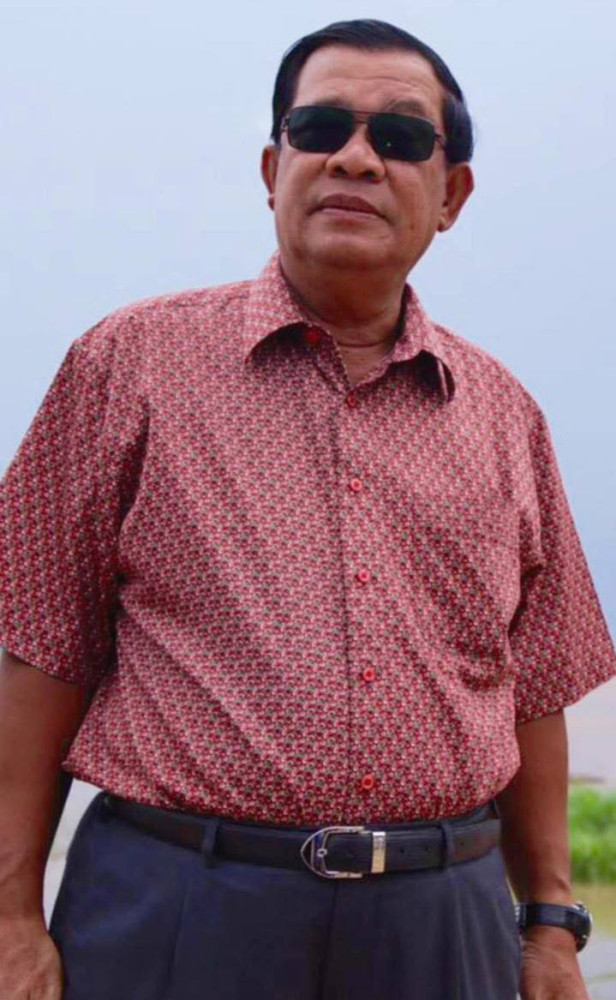
Acting Head of State Samdech Akka Moha Sena Padei Techo Hun Sen has shared and expressed interest in an analysis written by Thai political scientist and border affairs expert Professor Akaraphong Khamkhun regarding the ongoing Cambodia-Thailand maritime dispute and the application of the United Nations Convention on the Law of the Sea (UNCLOS).
In a social media post this morning Samdech Techo Hun Sen mentioned that he would refrain from commenting on the substance of the article and instead encouraged the peoples of both Cambodia and Thailand to consider the arguments presented by that Thai scholar.
The article, titled “Analysis of the Proposal: Thailand Mismanages the UNCLOS Game,” was published on June 7, 2026.
In that commentary, Professor Akaraphong Khamkhun argues that Cambodia has acted in accordance with international law by initiating compulsory conciliation proceedings under UNCLOS and notifying both Thailand and the United Nations Secretary-General.
According to the scholar, Cambodia’s move followed established legal procedures after Thailand’s unilateral decision to terminate the MoU 2001 (MOU 44) concerning overlapping maritime claims in the Gulf of Thailand. He noted that Cambodia had appointed two legal representatives and requested Thailand to nominate two representatives within three weeks, in line with UNCLOS provisions governing the establishment of a conciliation commission.
Professor Akaraphong Khamkhun sharply criticised what he described as Thailand’s lack of understanding of international maritime law. He argued that many Thai policymakers and members of the public have confused separate issues, including the land border dispute, the 1995 maritime cooperation framework, the 2000 land boundary memorandum, and bilateral military mechanisms such as the General Border Committee (GBC) and the Regional Border Committee (RBC).
“The problem lies in our failure to understand the rules and principles of international law,” he wrote, adding that Thailand has focused more on competing with Cambodia than on resolving the underlying disputes.
That academician further contended that Thailand’s unilateral cancellation of MOU44 has weakened its position internationally. He argued that the agreement did not contain provisions allowing unilateral termination and that the move was motivated largely by domestic political considerations rather than legal grounds.
According to Professor Akaraphong Khamkhun, Cambodia’s recent actions merely follow procedures already prescribed under UNCLOS, including provisions related to compulsory conciliation and maritime boundary disputes. He maintained that Thailand’s response reflects a broader failure to address the root causes of disagreements and instead relies on nationalist rhetoric and political maneuvering.
Professor Akaraphong Khamkhun also warned that continued mismanagement of the dispute could increase tensions and potentially lead to renewed military confrontations along the border. He described war as a symbol of political failure and argued that lasting solutions can only be achieved through adherence to international legal standards and established dispute-settlement mechanisms.
Last, Professor Akaraphong Khamkhun concluded that both countries should engage constructively within the framework of international law and UNCLOS procedures, emphasising that disputes should be resolved through legal and diplomatic channels rather than political confrontation.
By Heng Panha