KH
KH  FR
FR  AR
AR CN
CNCambodia Calls for Peaceful Resolution of Maritime Dispute with Thailand to Unlock Energy Potential, Minister Says
AKP Phnom Penh, May 27, 2026 --
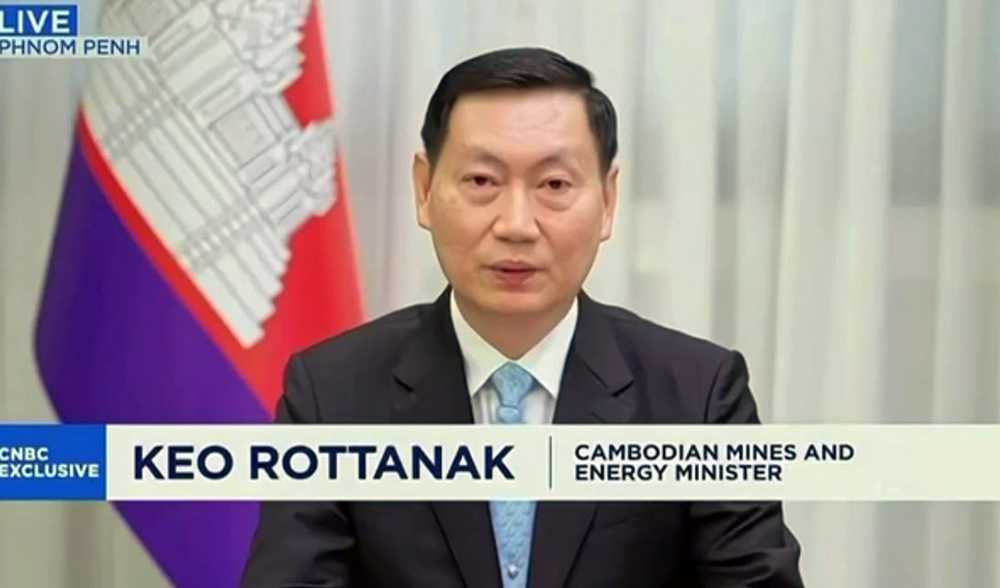
Cambodia has expressed its interest in resolving longstanding overlapping maritime claims with Thailand through peaceful means in order to unlock significant offshore energy resources, according to Minister of Mines and Energy H.E. Keo Rottanak.
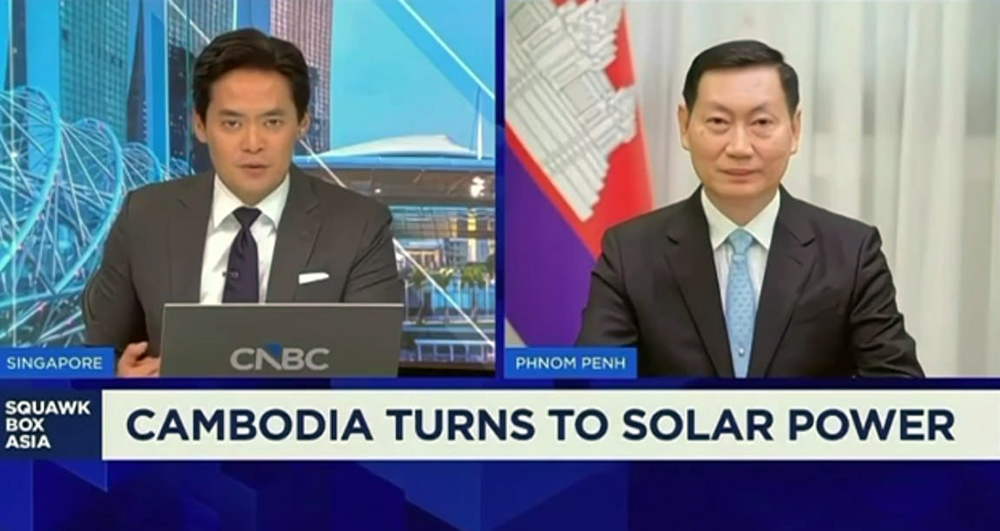
Speaking in a recent exclusive interview with CNBC, H.E. Keo Rottanak said the two countries have a shared interest in developing the so-called Overlapping Claims Area (OCA), which he noted could generate substantial economic benefits, including an estimated US$300 billion in shared resources.
He said such cooperation would not only benefit Cambodia and Thailand but could also contribute to broader regional energy security at a time of global energy uncertainty.
Cambodia, he stressed, remains firmly committed to peaceful dialogue and adherence to international law in resolving the issue.
The Minister recalled that both Cambodia and Thailand are parties to the United Nations Convention on the Law of the Sea (UNCLOS), under which maritime disputes can be addressed through established legal mechanisms.
He also referred to a 2001 Memorandum of Understanding (MoU) signed between the two countries, which he said provides a framework for joint development of petroleum resources in the OCA while negotiations on maritime delimitation are pursued.
However, he noted with regret that Thailand later withdrew from the agreement, which had been intended to guide cooperation in the disputed area.
Despite this, H.E. Keo Rottanak said Cambodia continues to believe in dialogue and peaceful settlement under international law, adding that Cambodia is considering the use of compulsory conciliation under UNCLOS as a possible mechanism to help resolve the maritime boundary dispute in a fair and peaceful manner.
He emphasised that resolving the issue would allow both countries to jointly develop and share offshore resources for mutual benefit, while also contributing to ASEAN’s broader energy needs.
By C. Nika