KH
KH  FR
FR  AR
AR CN
CNCambodia Issues Public Health Advisory on Ebola Prevention Following WHO Emergency Declaration
AKP Phnom Penh, May 18, 2026 --
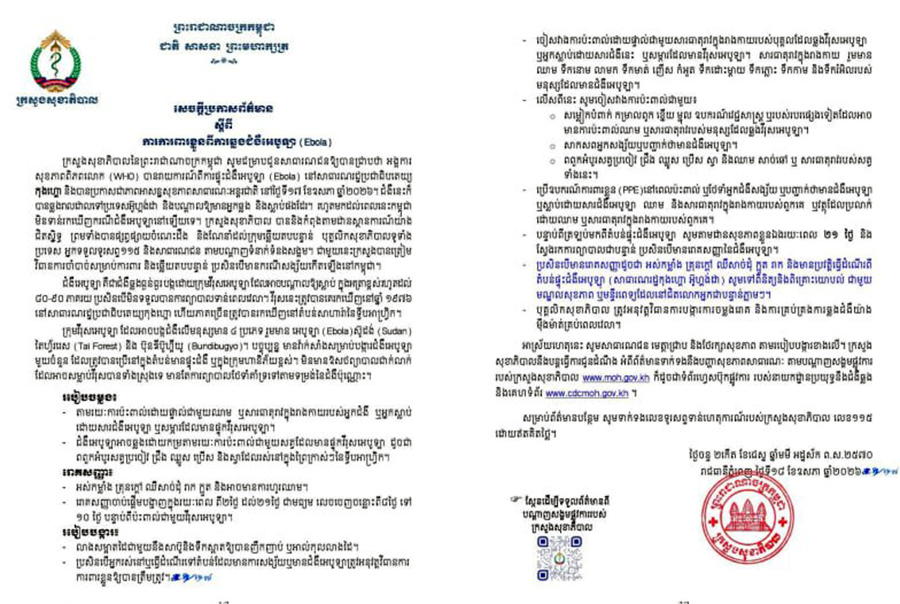
Cambodia’s Ministry of Health has issued a public advisory on Ebola prevention following the World Health Organisation’s declaration of an international public health emergency linked to the Ebola outbreak in the Democratic Republic of the Congo.
According to the Ministry, the WHO reported an Ebola outbreak in the Democratic Republic of the Congo and declared the situation a Public Health Emergency of International Concern on May 17, 2026. The disease has also spread to Uganda, resulting in infections and deaths.
The Ministry stressed that Cambodia has not detected any Ebola cases so far, but authorities are closely monitoring the situation and have prepared preventive and emergency response measures in case suspected cases emerge in the country.
The Ministry said it has been disseminating information and guidance to rapid response teams, healthcare workers nationwide, operators of the 115 emergency hotline, and the general public through social media and official communication channels.
Ebola is described as a severe infectious disease caused by the Ebola virus, with a fatality rate that can reach 80 to 90 percent if patients do not receive timely treatment. The virus was first identified in 1976 in the Democratic Republic of the Congo and is mainly found in sub-Saharan Africa.
The Ministry explained that Ebola spreads through direct contact with blood or bodily fluids of infected persons or those who have died from the disease, as well as contaminated objects. In rare cases, transmission may also occur through contact with infected wild animals such as bats, deer, monkeys, antelopes and monkeys living in Africa’s dense forests.
Common symptoms include fatigue, fever, muscle pain, vomiting, diarrhea, and bleeding. Symptoms can appear between two and 21 days after exposure, usually within eight to ten days.
The Ministry urged the public to practice preventive measures, including frequent handwashing with soap or alcohol-based sanitisers, avoiding direct contact with bodily fluids of infected individuals, and refraining from handling wildlife or raw meat from potentially infected animals.
People returning from Ebola-affected areas are advised to monitor their health for 21 days and seek immediate medical attention if symptoms develop, particularly if they have recently travelled from the Democratic Republic of the Congo or Uganda.
Healthcare workers were also instructed to strictly follow infection prevention and control measures at all times.
The Ministry said it will continue to provide updates through its official platforms, including the Ministry of Health website and the Communicable Disease Control Department’s channels.
By C. Nika