KH
KH  FR
FR  AR
AR CN
CNMekong Giant Catfish Under Threat: Research Highlights Plight of Endangered Giant
AKP Phnom Penh, April 22, 2026 --
A recent study published in the journal Global Ecology and Conservation has shed new light on the Mekong giant catfish, one of the world's largest freshwater fish, as it faces an increasingly precarious future in the Mekong River basin.
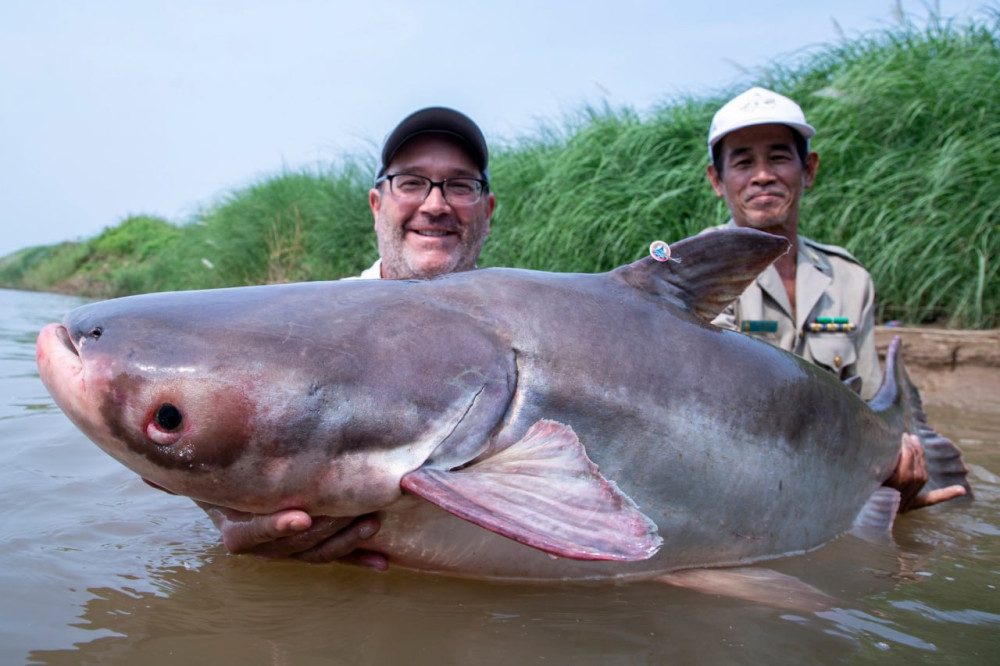
Native exclusively to the Mekong River, the Mekong giant catfish (Pangasianodon gigas) is a scientific marvel, capable of reaching lengths of up to 3 metres and weighing as much as 300 kilogrammes. Its habitat spans Cambodia, Laos, Thailand, and Vietnam, with historical ranges extending into southern China and Myanmar.
Once a symbol of the river's immense biodiversity, this scaleless giant has seen its population collapse since the early 20th century. Experts attribute the decline to habitat loss, the disruption of migratory routes for spawning, and accidental capture by fishing gear.
The species is currently listed as "Critically Endangered" on the IUCN Red List and is protected under the Convention on Migratory Species (CMS).
While commercial fishing for the catfish is strictly prohibited—with bans enacted in Thailand (1947), Cambodia (2003), and Laos (2009)—accidental "bycatch" remains a significant threat.
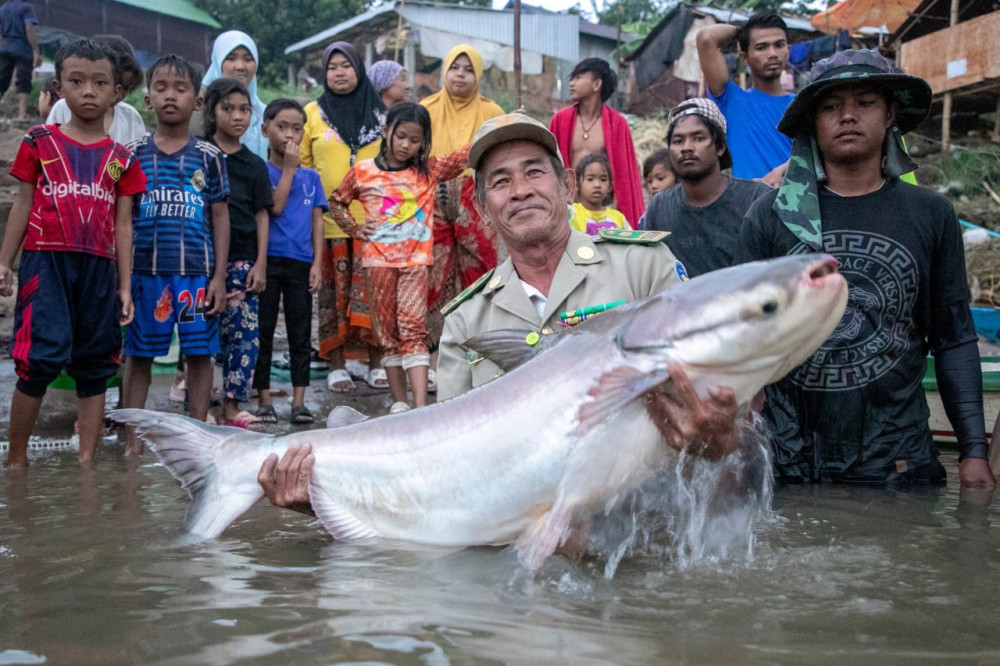
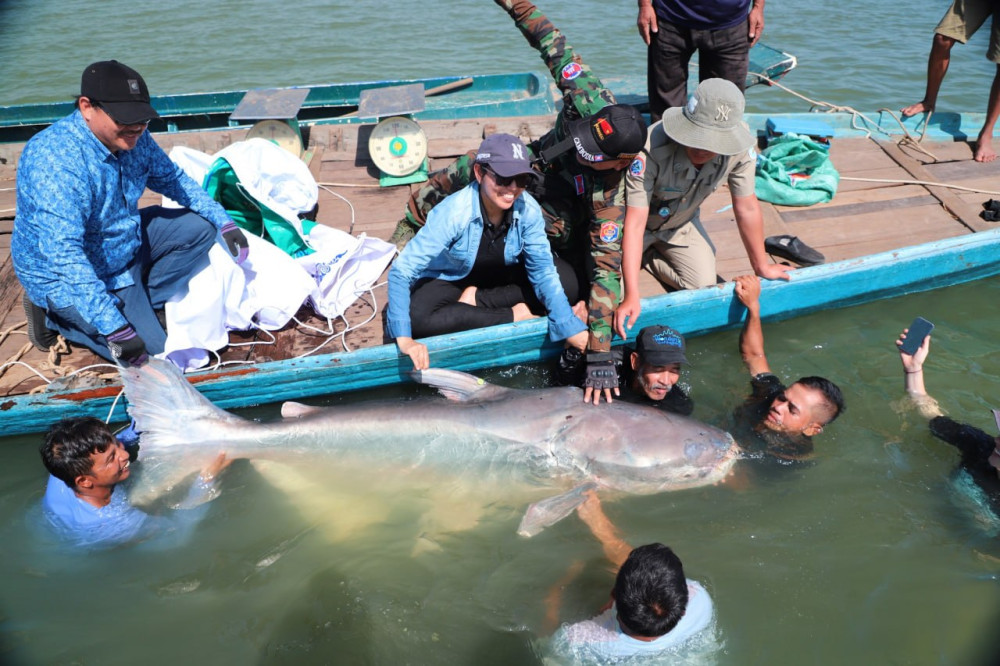
Research conducted on bycatch in Cambodia between October 1999 and January 2025 recorded 132 giant catfish caught by local fishers. The study found a survival rate of over 83 percent for fish that were tagged and released back into the wild.
However, the data also revealed a worrying trend: the average size and weight of captured fish have decreased over time, suggesting a shift in the population's demographic structure.
Recorded specimens in the study ranged from 100 to 263 centimetres in length and weighed between 12 and 291 kilogrammes.
Migratory patterns observed during the peak months of October to January confirm the critical connectivity between the Mekong mainstream, the Tonle Sap River, and the Tonle Sap Lake. These routes remain consistent with historical migration paths used by the fish at various life stages, from juveniles to spawning adults.
Fishery researchers emphasised that reports from local fishing communities are vital for monitoring the species. Detailed data on migration timing, spawning grounds, and environmental conditions are being used to refine management plans aimed at preventing the extinction of this Mekong icon.
By K. Rithy Reak (Source: Wonders of the Mekong)