KH
KH  FR
FR  AR
AR CN
CNCambodia to Launch Skills Recognition Tests for Workers Returning from Thailand on April 24
AKP Phnom Penh, March 26, 2026 -- The Royal Government of Cambodia will begin recognising the prior skills of Cambodian workers returning from Thailand, with assessments set to start on April 24, a Royal Government spokesperson announced Thursday.
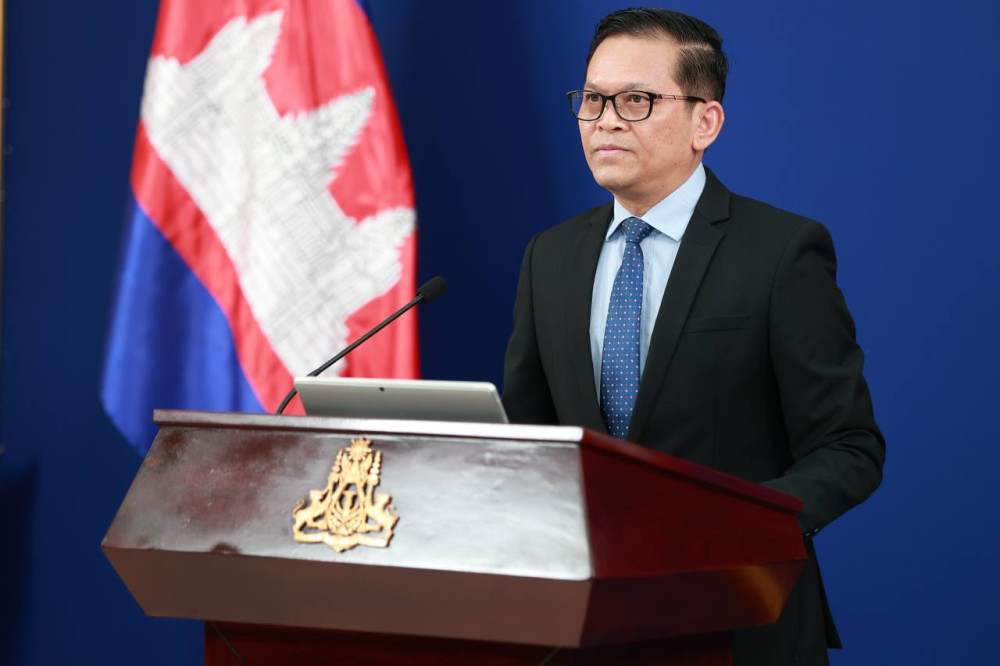
Speaking at a press conference on Mar. 26, H.E. Pen Bona, a Royal Government Spokesman, stated that in line with the high recommendation of Prime Minister Samdech Moha Borvor Thipadei Hun Manet to promote development and recognise the skills of Cambodian workers returning from Thailand, the Ministry of Labour and Vocational Training will organise Recognition of Prior Learning (RPL) assessments.
These assessments will convert the work experience and practical skills of these workers into formal skills certificates, enabling them to secure better employment opportunities and higher incomes.
The spokesperson further detailed that the assessment process will commence on April 24, 2026, covering eight specific skills within the construction sector: masonry (brick laying and plastering), tiling, formwork installation, plumbing, electrical wiring in buildings, scaffolding, steel fixing, and electric welding.
The Royal Government will cover the cost of the assessments for all workers.
In addition, the Royal Government spokesperson urged workers returning from Thailand to contact the Ministry of Labour and Vocational Training for detailed information regarding registration and the assessment process.
According to the Ministry, approximately 650,000 former Cambodian migrant workers who returned from Thailand have secured employment, of whom roughly 330,000 have been employed in enterprises, companies, factories, and large farms, while another 320,000 have found work in construction sites, handicrafts, restaurants, agriculture, and retail.
This situation underscores the high level of attention from the Royal Government, particularly from Prime Minister Samdech Thipadei Hun Manet, in providing employment and income opportunities for returning workers, as well as formally recognising their prior skills.
By K. Rithy Reak