KH
KH  FR
FR  AR
AR CN
CNANA to Rehabilitate Ancient Angkorian Drainage System in Angkor Thom
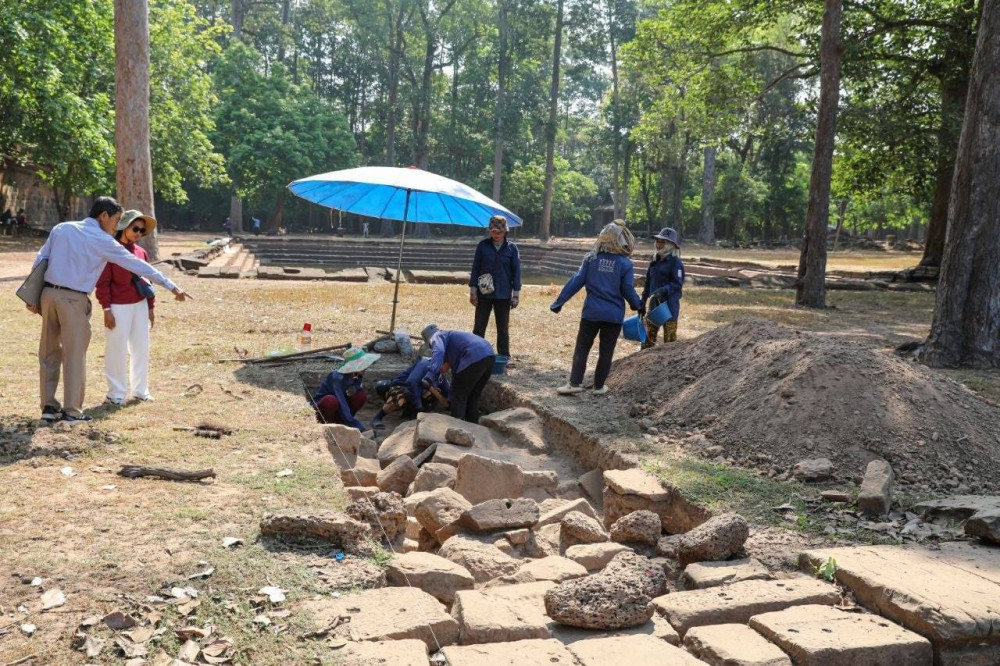
AKP Phnom Penh, March 20, 2026 -- An archaeological team from the APSARA National Authority (ANA) has been conducting a month-long research study outside the walls of the former Royal Palace of Angkor Thom.
The study aims to investigate the structural remains of the ancient moat and the drainage system that once channeled water from the Royal Palace to the exterior and into the surrounding moat.
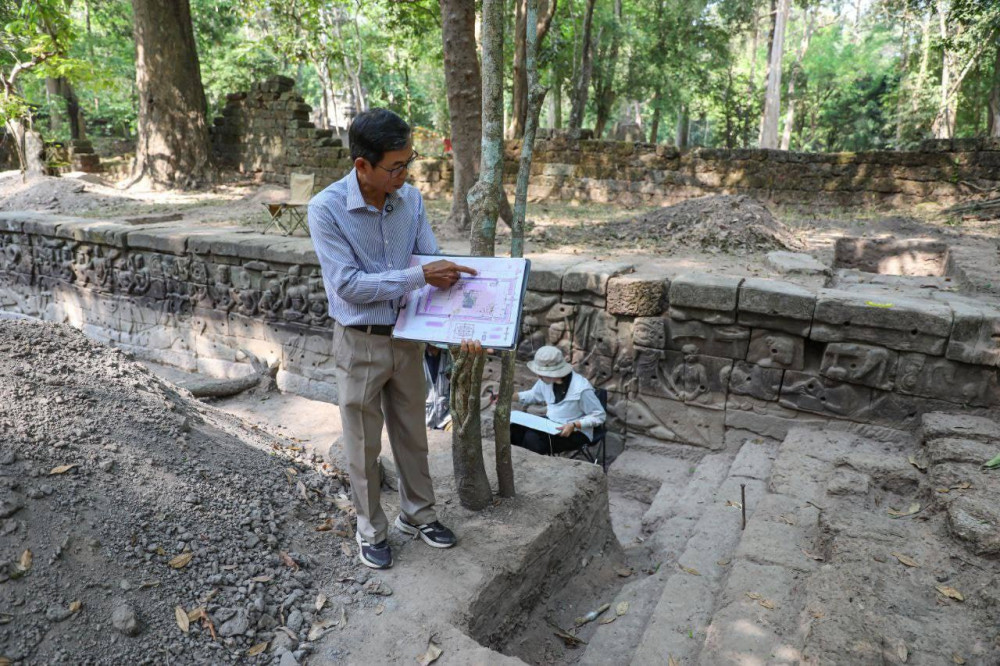
Mr. Srun Tech, an archaeologist with the APSARA National Authority, leading the project, stated on Mar. 20 that preliminary excavation results from four sites reveal significant findings. The team discovered soil deposits reaching a depth of up to three metres. The moat structure itself consists of 9 to 11 laterite steps, indicating carefully engineered design.
In addition, three ancient drainage systems were uncovered at the base of the palace walls, featuring a total of six water outlets. These systems once played a crucial role in channeling water from within the Royal Palace grounds into the surrounding moat.
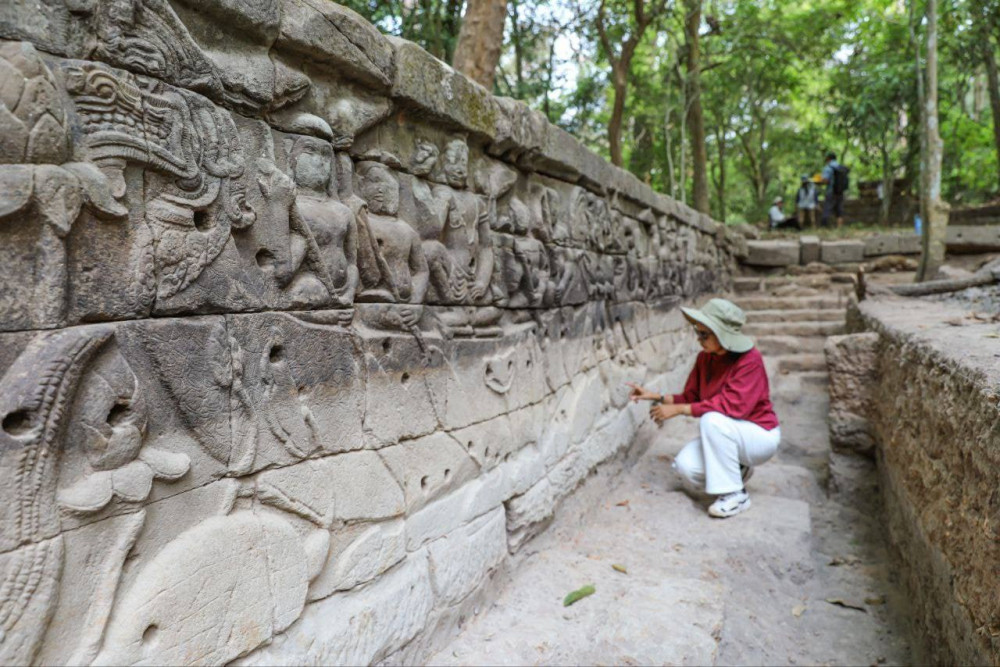
The team also identified traces of an ancient pond located on the northern side of the palace walls, constructed with 15 laterite steps.
Notably, the western side of this pond features intricate carvings, reflecting the artistic sophistication of the period.
According to Mr. Srun Tech, the drainage system and moat structures were gradually buried over time due to natural factors such as sediment accumulation, vegetation growth, and human activity. The ongoing excavation is not only enhancing understanding of Angkorian hydraulic engineering but also supporting future restoration efforts.
The APSARA National Authority plans to rehabilitate the ancient drainage system to restore its original function. “This is important as the former Royal Palace area currently experiences seasonal flooding during the rainy season, largely due to the long-term deterioration of the drainage infrastructure,” Mr. Srun Tech said.
By Chea Vannak