KH
KH  FR
FR  AR
AR CN
CNCambodia Managing Energy Supply Shock Despite Strait of Hormuz Disruption
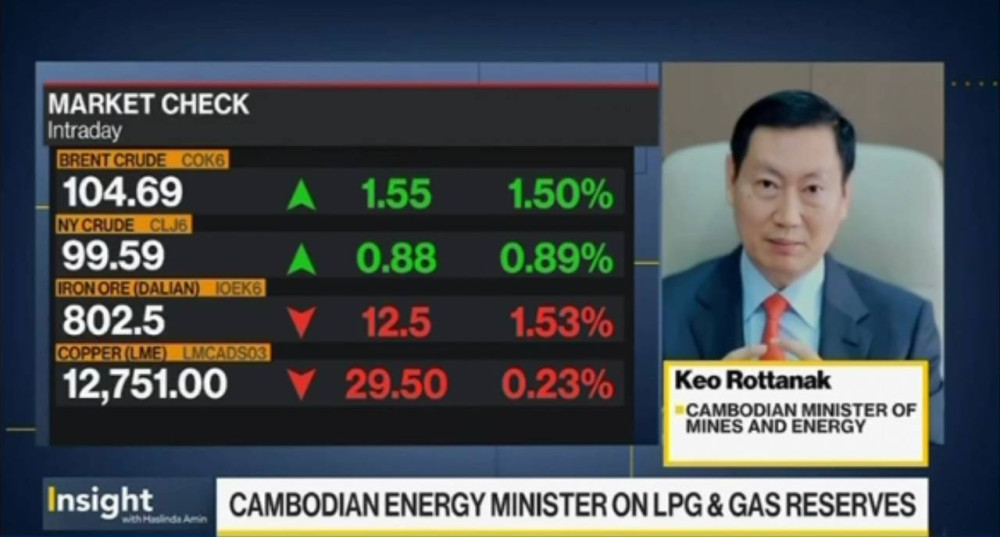
AKP Phnom Penh, March 16, 2026 -- Cambodia is managing the impact of global oil supply disruptions linked to the situation in the Strait of Hormuz, although the country is not immune to the effects, according to the Minister of Mines and Energy H.E. Keo Rottanak.
“Cambodia is not immune to this, just like the rest of the world, because 84 percent of the oil and gas from that part of the world is destined for Asia,” the Minister said in an exclusive interview with Bloomberg.
H.E. Keo Rottanak acknowledged that Cambodia has already felt the direct impact of the disruption and has therefore called on consumers to use oil and gas products more responsibly.
Despite the challenges, the Royal Government has been able to manage the shock in what the Minister described as a transparent and orderly manner. While petrol prices have risen by more than 30 percent and diesel by more than 60 percent, he said the country has so far been able to maintain the continuation of supply.
Cambodia currently holds slightly less than 30 days of fuel reserves. The Minister explained that the country does not yet have oil refineries or large-scale fuel stockpiling facilities, although efforts are underway to establish them in the near future.
“In reality, we are about three weeks,” he said, adding that Cambodia has been able to diversify its sources of imports, which continue to replenish the country’s fuel stocks regularly.
At the same time, the Royal Government is working to ensure the public does not enter panic mode. According to H.E. Keo Rottanak, people have so far been able to obtain the gas and fuel they need without panic buying, illegal stockpiling, or uncontrolled price increases.
The Minister also explained that Cambodia uses an open, transparent, and predictable pricing system linked to international oil and gas price movements. Within this system, a cushion in the formula allows the government to manage external shocks so that the full impact is not passed directly to consumers.
Through this mechanism, the government is able to absorb part of the price shock while consumers share part of the burden. However, the minister noted that no country can absorb the full impact of global oil price increases.
The pricing system, which has been in practice for some time, is designed to remain transparent to the public and prevent importers or industry partners from taking advantage of the situation through profiteering, affirmed H.E. Keo Rottanak.
By C. Nika