KH
KH  FR
FR  AR
AR CN
CNSamdech Techo Hun Sen Shares Thai Scholar’s Analysis Suggesting Border Conflict Strengthened Cambodia’s Position
AKP Phnom Penh, July 21, 2026 —
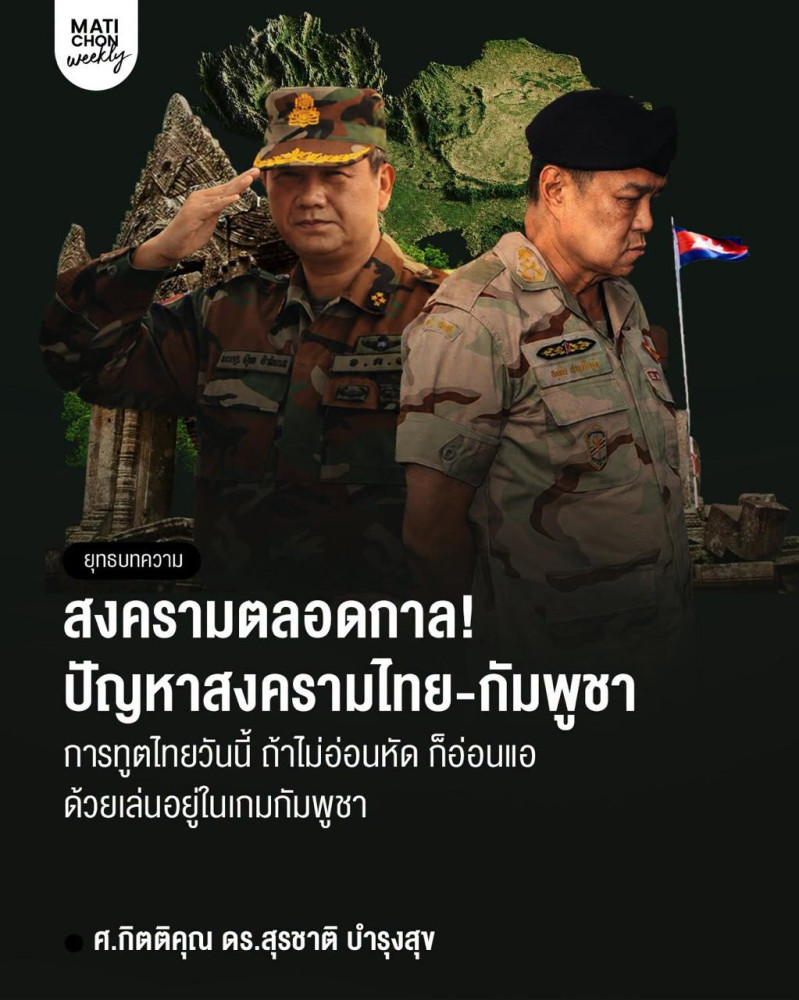
Senate President Samdech Akka Moha Sena Padei Techo Hun Sen on Tuesday shared an unofficial Khmer translation of an article by Thai international relations and security expert Surachart Bamrungsuk, saying he wanted people in both Cambodia and Thailand to better understand the author’s perspective.
In a message posted on the evening of July 21, Samdech Techo said he was once again interested in an article by Surachart Bamrungsuk titled “The Paradox: War Has Also Strengthened Cambodia’s Ruling Regime.” He stressed that he was sharing only an unofficial translation of the article without adding any personal commentary, leaving it to the people of both countries to consider the views expressed.
According to the article, wars have historically strengthened governments rather than weakened them, citing Ukraine and Iran as examples. The author argued that the Cambodia-Thailand border conflict had likewise reinforced Cambodia’s leadership instead of undermining it.
The article contended that the border conflict had failed to deliver strategic advantages for Thailand and had instead produced results contrary to the expectations of those who believed military force, particularly air strikes, could bring about the collapse of Cambodia’s government.
The author further argued that if Thailand wished to avoid relying on military means, it would need a stronger diplomatic strategy. However, he suggested that Thailand’s diplomacy appeared to be following Cambodia’s lead, with Bangkok often finding itself reacting to Cambodia’s initiatives on the international stage and remaining on the defensive in the information sphere.
The article clarified that this assessment was not intended to suggest Cambodia was inherently superior to Thailand, but rather to present an alternative perspective and caution against excessive support for military solutions, which could lead to strategic miscalculations and fail to achieve the intended objectives.
It concluded that the time had come to seek a genuine solution to the Cambodia issue, acknowledging that Cambodia now possessed greater capacity to play an active role internationally than many had previously assumed. The author also described Thai Prime Minister Anutin’s proposal to find a path toward ending the conflict as a major challenge, arguing that Thailand could not remain in its current situation indefinitely.
By C. Nika