KH
KH  FR
FR  AR
AR CN
CNCambodia Rejects Allegation That Preah Vihear Temple Is Used as Military Base
AKP Phnom Penh, February 27, 2026 --
The Ministry of Culture and Fine Arts of the Kingdom of Cambodia has categorically rejected allegations that the Temple of Preah Vihear has been used as a military base, calling the claim unfounded and contrary to international law.
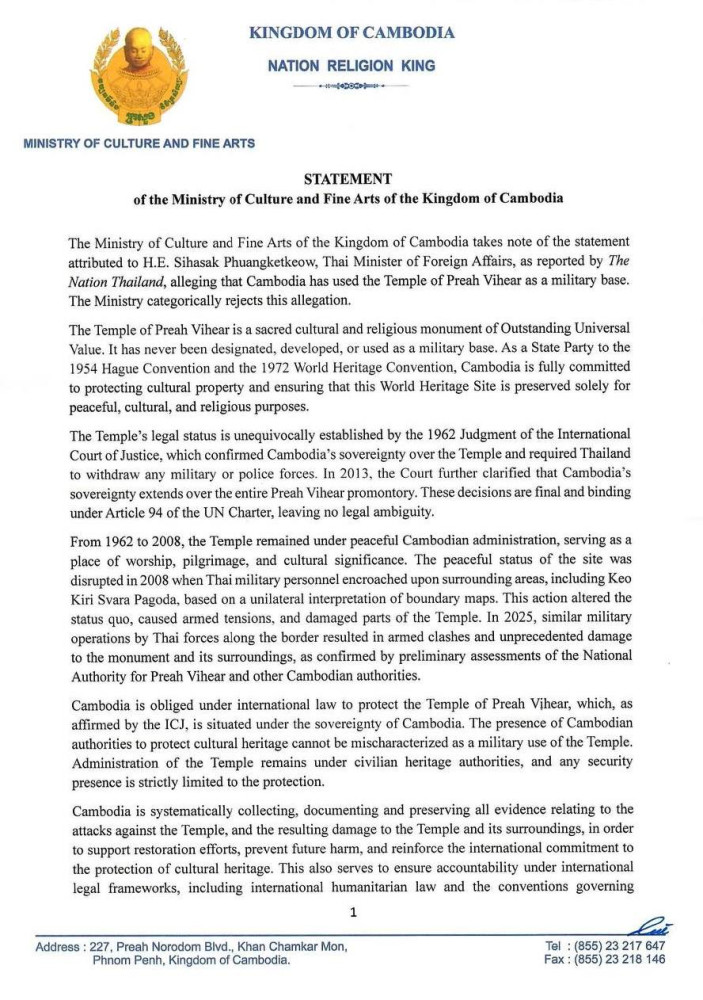
In a statement issued on Feb. 27, the Ministry responded to remarks attributed to Thai Foreign Minister Sihasak Phuangketkeow, as reported by The Nation Thailand, alleging military use of the World Heritage site by Cambodia. The Ministry said the Temple of Preah Vihear is a sacred cultural and religious monument of Outstanding Universal Value and has never been designated, developed, or used for military purposes.
The Ministry emphasised that Cambodia, as a State Party to both the 1954 Hague Convention and the 1972 World Heritage Convention, remains fully committed to protecting cultural property and ensuring that the Temple is preserved exclusively for peaceful, cultural, and religious purposes.
It recalled that the legal status of the Temple was definitively established by the 1962 Judgment of the International Court of Justice (ICJ), which confirmed Cambodia’s sovereignty over the site and required Thailand to withdraw any military or police forces. A 2013 ICJ ruling further clarified that Cambodia’s sovereignty extends over the entire Preah Vihear promontory. The Ministry stressed that these rulings are final and binding under Article 94 of the United Nations Charter.
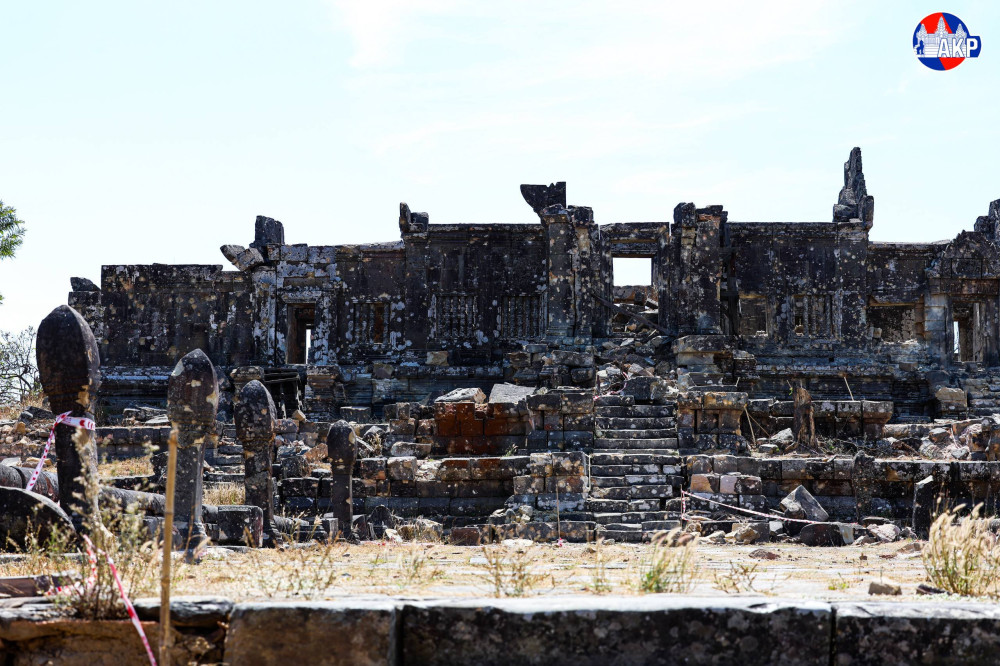
According to the statement, from 1962 to 2008 the Temple remained under peaceful Cambodian administration and functioned as a place of worship, pilgrimage, and cultural significance. The Ministry said this status was disrupted in 2008 when Thai military personnel entered surrounding areas based on a unilateral interpretation of boundary maps, leading to tensions and damage to parts of the Temple. It added that in 2025, further Thai military operations along the border resulted in armed clashes and unprecedented damage to the monument and its surroundings, as confirmed by preliminary assessments by the National Authority for Preah Vihear and other Cambodian institutions.
The Ministry underlined that Cambodia has a legal obligation to protect the Temple, which lies under its sovereignty as affirmed by the ICJ. It stated that the presence of Cambodian authorities at the site is solely for heritage protection and cannot be characterised as military use, noting that administration of the Temple remains under civilian heritage authorities.
Cambodia is currently collecting and preserving evidence related to attacks on the Temple and the resulting damage, the Ministry said, to support restoration efforts, prevent future harm, and ensure accountability under international legal frameworks, including international humanitarian law. It stressed that damage to a World Heritage Site is a matter of international concern that goes beyond political disputes.
The Ministry concluded by reaffirming that Cambodia’s sovereignty over the Temple of Preah Vihear and its promontory has been definitively settled by binding ICJ judgments, and warned that portraying the Temple as a military base undermines international judicial authority and threatens regional peace. It reiterated Cambodia’s commitment to international law, cultural heritage protection, peaceful dispute settlement, and regional cooperation, affirming that the Temple of Preah Vihear will remain a monument of peace, culture, and shared human heritage.
By C. Nika