KH
KH  FR
FR  AR
AR CN
CNMekong Giant Catfish: A 'Living Fossil' and Priceless Natural Treasure of Cambodia
AKP Phnom Penh, February 27, 2026 --
The Mekong giant catfish (Pangasianodon gigas) is regarded as an exceptionally rare species and a priceless treasure, endemic exclusively to the Mekong River basin.
It stands as a living testament to history and a precious natural heritage, continuing its life and silently navigating the waters of the Mekong today.
The Mekong giant catfish is not only one of the largest freshwater fish species on the planet but also a symbol of endemism, found nowhere else on Earth. As a colossal fish, it embodies a legacy of profound ecological and cultural significance, reflecting the pristine nature and the overall health of the Mekong River.
For decades, this species has undertaken its seasonal migration from the Mekong River to the Tonle Sap Lake, the heart of Cambodia, during the monsoon season to feed and grow. Some individuals also migrate downstream to the floodplains of the Mekong Delta in Prey Veng province.
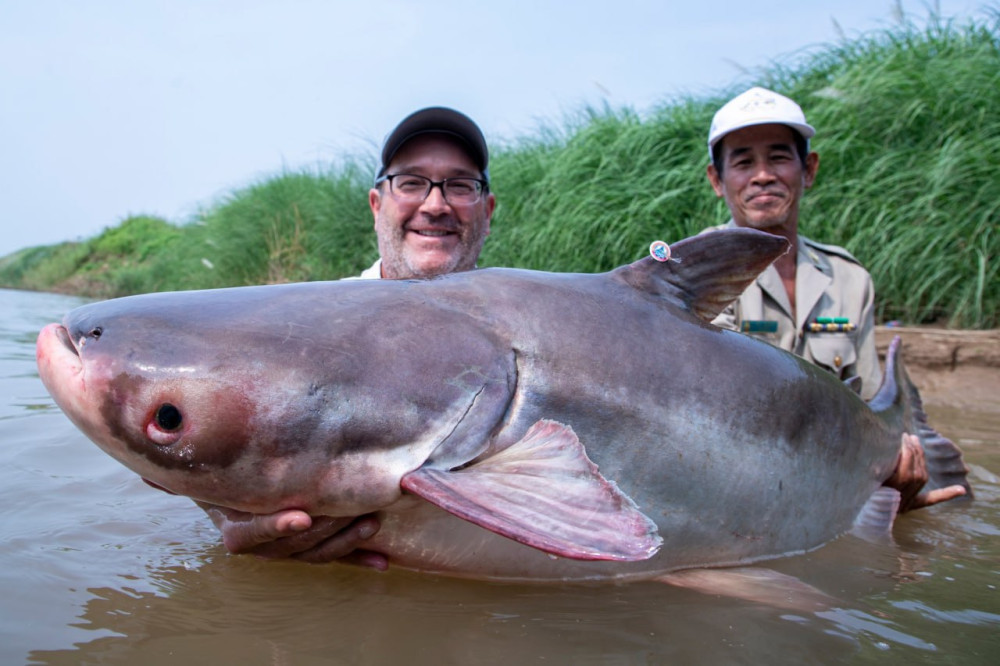
Reaching lengths of up to three metres and weights of up to 350 kilogrammes, the Mekong giant catfish is truly deserving of its "giant" title. Its body is characterised by silvery-white colouring on the underside, transitioning to a grey hue along the back from head to tail. It has a smooth, sleek body, devoid of stripes in adulthood, presenting a gentle yet powerfully imposing figure.
Despite its immense size, it poses no threat to humans, animals, or other fish species. Juveniles possess small teeth and barbels, but these features begin to recede and disappear once the fish reaches a length of 30 to 50 centimetres. In their youth, their eyes are aligned with the mouth slit, but as they mature, the eyes shift to a position below the mouth slit. Young Mekong giant catfish bear a resemblance to young striped catfish, often leading to confusion and their inadvertent capture and sale alongside them.
The Mekong giant catfish inhabits natural river systems but can also survive in aquaculture ponds. Unlike predatory species, it feeds on algae, phytoplankton, aquatic plants, and detritus on the riverbed. In pond environments, it consumes waste residue from other fish. This diet gives the species a vital role in maintaining the ecological balance of the Mekong River. However, much of its life history remains an enigma. Researchers are continuously striving to understand its spawning behaviours, migration routes, and population dynamics in the lower Mekong River basin.
Scientific records indicate that the Mekong giant catfish was historically a long-distance migrant, traversing over 4,000 kilometres along the Mekong River from China's Yunnan province to the Mekong Delta in Vietnam.
Presently, due to habitat loss and overfishing, it can no longer thrive or migrate freely across its entire historical range. Its population has experienced a drastic decline. According to a status assessment by Dr. Zeb Hogan in 2011, the species was classified as Vulnerable from 1986 to 1994. By 1996, its status escalated to Endangered. From 2003 to the present, the Mekong giant catfish has been listed as Critically Endangered on the IUCN Red List, marking a deeply concerning trajectory.
International commercial trade is strictly prohibited under CITES Appendix I, and the species is also listed under the Convention on Migratory Species (CMS), highlighting the need for transboundary conservation efforts.
Reflecting the commitment to protecting threatened aquatic species, the Royal Government of Cambodia has included the Mekong giant catfish among 29 freshwater species afforded protection under Sub-Decree No. 123, dated Aug. 12, 2009.
The decline in the wild population of the Mekong giant catfish has become a pressing concern. Protecting this species is intrinsically linked to safeguarding the river's ecosystem, ensuring food security, and preserving the cultural heritage and beliefs associated with it.
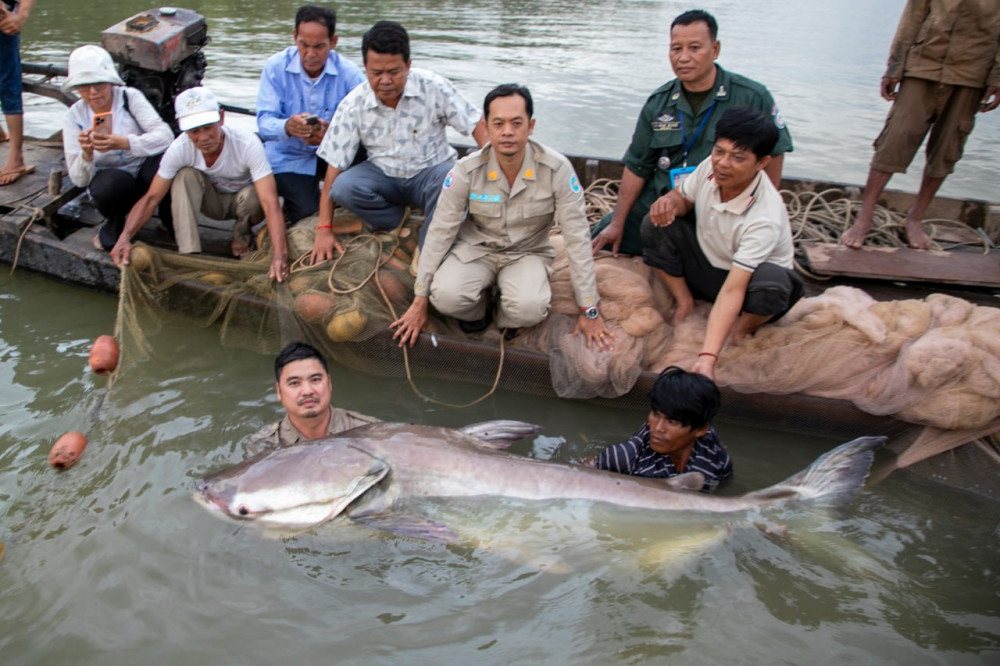
The Wonders of the Mekong project, in partnership with the Inland Fisheries Research and Development Institute (IFReDI) of the Fisheries Administration, local authorities, and fishing communities, is diligently working on documentation, rapid response initiatives, and a tagging and release programme to contribute to the conservation of the Mekong giant catfish within Cambodian waters.
Collaborative efforts have resulted in the successful tagging and release of 58 individual catfish back into their natural habitat since 2022. Notably, 10 of these 58 fish were tagged and released during January and February of 2026.
The release of each Mekong giant catfish back into the wild transcends scientific achievement. It is an act of national pride, a blessing, and a demonstration of unity. It stands as tangible proof that Cambodian fishers, researchers, technical officials, and communities are working together diligently to protect this iconic species. This is not merely about a fish; it is about preserving a living symbol that continues to thrive in the Cambodian Mekong, swimming among the multitude of other aquatic life. It serves as a powerful reminder of our profound responsibility to protect our river, our food security, our culture, and to ensure the transmission of ancestral knowledge to future generations.
By K. Rithy Reak (Photo: Wonders of the Mekong)