KH
KH  FR
FR  AR
AR CN
CNTrade Expo Boosts Cambodia-Italy Business Engagement
AKP Phnom Penh, February 06, 2026 --
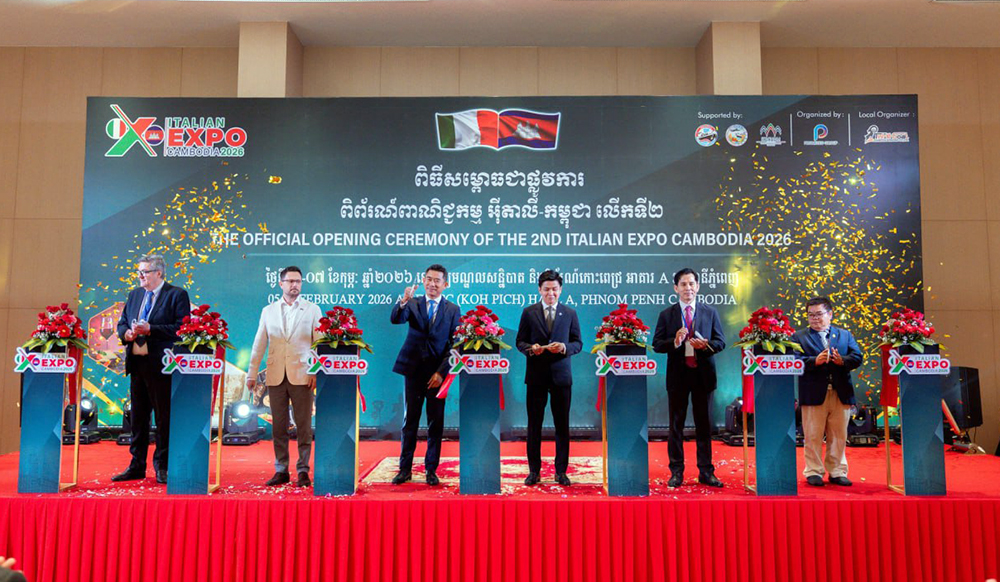
The 2nd Italian Expo Cambodia 2026 kicked off at the Koh Pich Convention and Exhibition Hall in Phnom Penh on Feb. 5, bringing together businesspeople, traders, and major companies from Italy to explore business partnerships, networking opportunities, and regional cooperation.
The opening ceremony of the three-day event was presided over by H.E. Samheng Bora, Secretary of State at the Ministry of Commerce, and attended by senior representatives from the Council for the Development of Cambodia, including H.E. Nut Unvoanra, Onkha Dr. Tan Monivann, Vice President of the Cambodia Chamber of Commerce (CCC), as well as representatives from ItaCham, EuroCham Cambodia, and other relevant organisations.
Italian Expo Cambodia 2026 provides a platform for Italian companies to strengthen their presence in Cambodia’s growing market while establishing new business relationships with potential clients, importers, and distributors.
The expo features around 80 booths representing approximately 50 companies across a wide range of sectors, including agricultural machinery, furniture, food and beverages, kitchenware, bathroom accessories, cosmetics, construction materials, clothing, and bead products imported from Italy. The event also showcases booths featuring locally made Cambodian products.
“The event provides members with opportunities to identify business partners, learn about key technologies, and strengthen collaborative relationships to drive business development,” the Cambodia Chamber of Commerce said.
According to figures from the General Department of Customs and Excise, bilateral trade between Cambodia and Italy reached US$490 million in 2025, a year-on-year increase of 21.8 percent from US$402 million in 2024.
Of this total, Cambodia exported US$381 million worth of goods to Italy, up 16.4 percent from US$327 million in the previous year, while imports from Italy surged by 45 percent to US$109 million.
Cambodia mainly exported consumer goods such as garments and footwear to Italy, while importing Italian cosmetics, industrial textile machinery, and automotive products.
By Chea Vannak