KH
KH  FR
FR  AR
AR CN
CNClub of Cambodian Journalists Provides Protective Gear to Reporters Covering Border Areas
AKP Phnom Penh, December 26, 2025 --
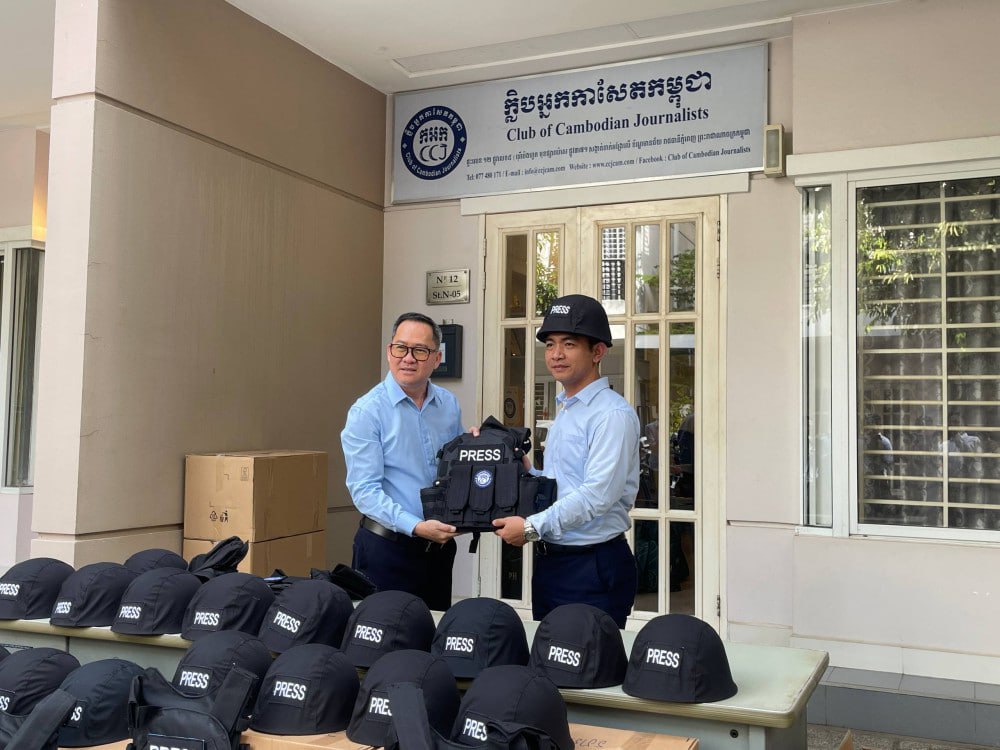
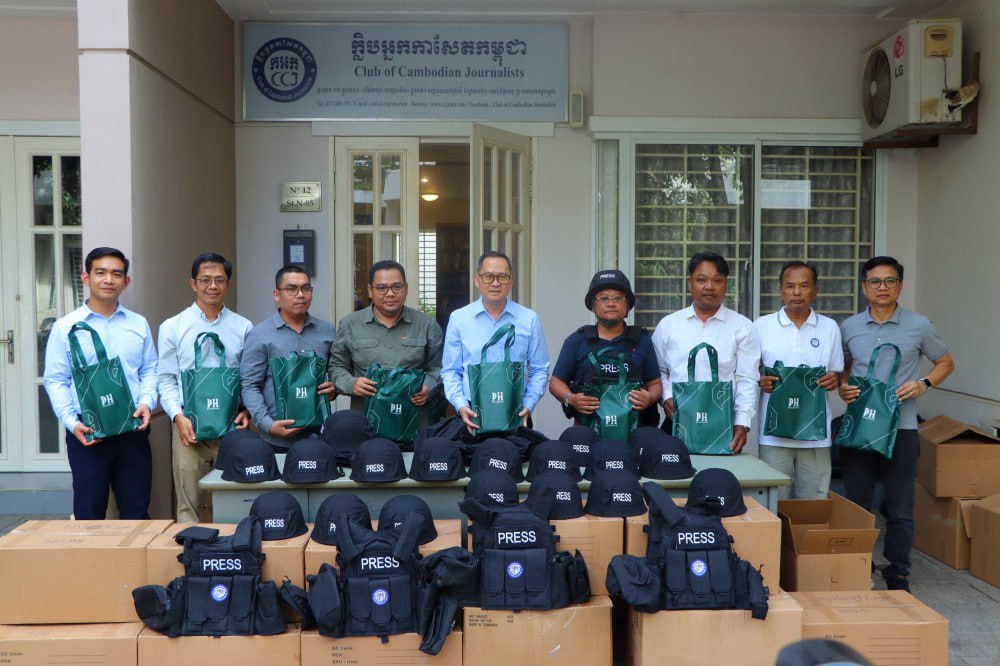
The Club of Cambodian Journalists (CCJ) on Friday distributed protective vests and safety helmets to 57 journalists from 36 media organisations to help safeguard them while reporting along the Cambodia-Thailand border, where security risks remain elevated.
The equipment, clearly marked “PRESS,” is intended to improve the safety and mobility of reporters covering sensitive and potentially dangerous assignments in border areas. Each recipient also received basic protective accessories to support field reporting.
CCJ President Mr. Puy Kea said the initiative reflects growing concerns over journalist safety amid heightened tensions and sporadic violence near the frontier.
“Although the current distribution does not meet the needs of all journalists deployed to conflict-prone and high-risk areas along the border, the CCJ will continue seeking additional support from donors to address urgent safety requirements during this period,” he told reporters on Friday afternoon.
Mr. Puy Kea underscored that journalists reporting during armed conflict are protected under international law as civilians, given their role in informing the public about unfolding events. They do not take part in hostilities and do not bear arms, he said.
At the same time, he stressed that journalists must adhere to professional and legal standards, including refraining from reporting sensitive military information such as troop movements, defensive positions or other details that could endanger civilians or be construed as tactical or intelligence-related.
Since the outbreak of hostilities along the Cambodia-Thailand border, at least one journalist has been injured by shelling attributed to Thai forces, Mr. Puy Kea said. Two to three others sustained injuries linked to movement in hazardous areas, though not directly from gunfire or artillery strikes.
Journalists often face risks similar to those encountered by frontline forces, he added, because their work requires them to operate at sites of clashes, civilian casualties and areas struck by artillery or aerial attacks.
“Their presence in these locations is essential to document the reality on the ground,” Mr. Puy Kea said. “But it also exposes them to serious danger, making protective equipment a critical necessity.”
The Club of Cambodian Journalists said it would continue coordinating with partners and donors to enhance safety measures for reporters operating in conflict-affected areas.
By K. Rithy Reak