KH
KH  FR
FR  AR
AR CN
CNKor Chuk, a Traditional Ceremony Marking Transition from Childhood to Adulthood
AKP Phnom Penh, April 03, 2025 --
The Kor Chuk ceremony is a significant cultural traditional marking the transition from childhood to adulthood, observed by the Khmer people since ancient times.
While this ancient practice has seen a decline in observance among modern families, it continues to thrive in certain regions, particularly in Angkor and some provinces, where communities strive to uphold their cultural heritage.
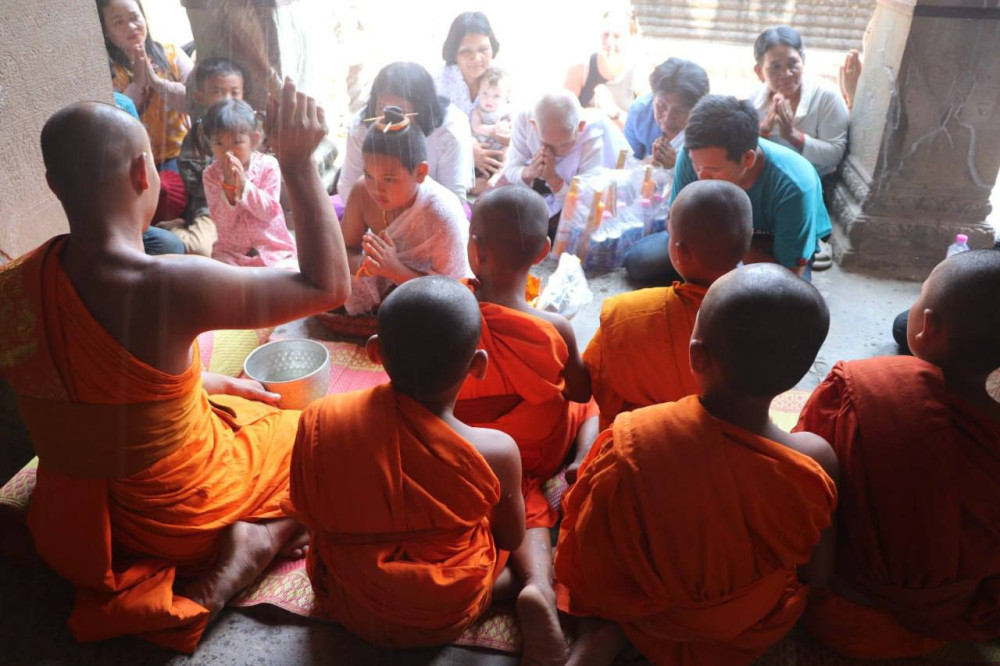
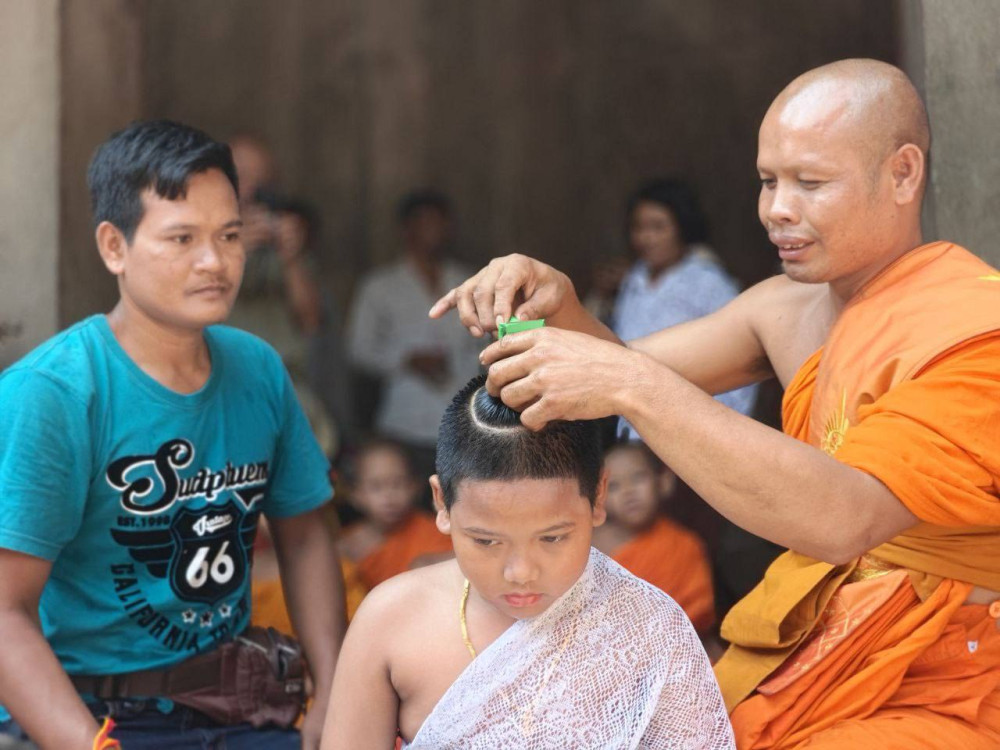
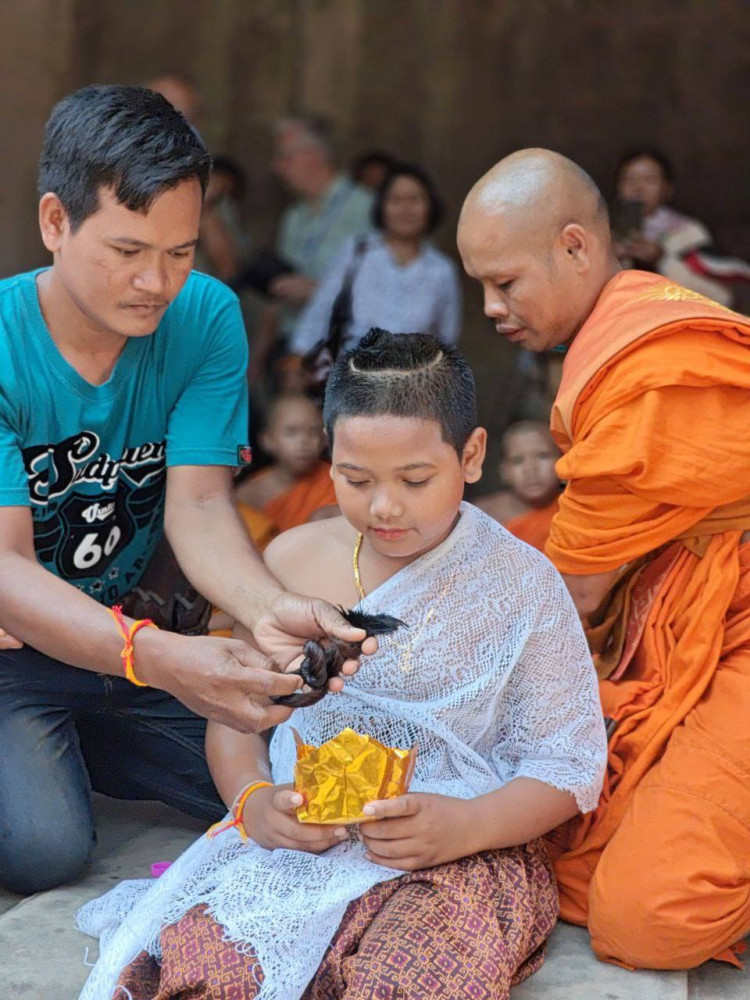
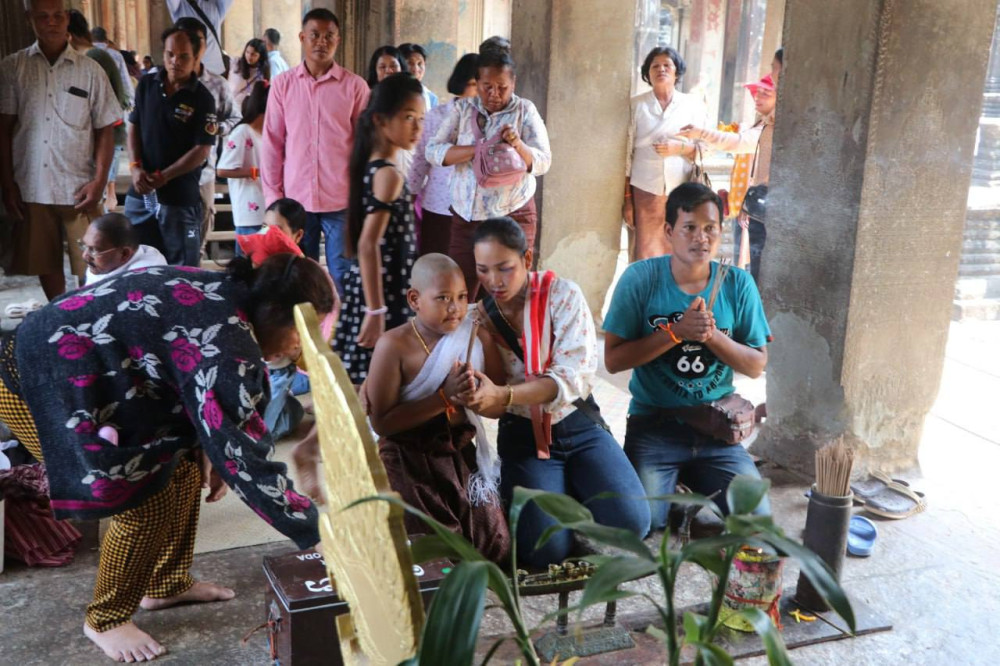
For instance, on April 2, a family from Prasat village in Puok district, Siem Reap province brought their son to Angkor Wat for the Kor Chuk ceremony, emphasising the importance of familial ties and cultural heritage.
Ms. Phleang Phat, a 64-year-old grandmother, shared her experience of bringing her 9-year-old grandson to Angkor Wat for this special occasion. She highlighted that this practice has been passed down through four generations in her family, underscoring the deep-rooted nature of this tradition. For her, returning to Angkor Wat for the Kor Chuk ceremony is not just a ritual; it symbolises a connection to her ancestors and a hope for continued happiness and prosperity for her family.
According to the APSARA National Authority, this ceremony symbolises pivotal moments in an individual's life, emphasising the shift from one stage to another, particularly from childhood to adulthood and the accompanying responsibilities.
Historically, the Kor Chuk ceremony was performed for boys and girls who had not yet reached puberty, signifying their entrance into adulthood. Often referred to as a coming-of-age ceremony, it serves to formally integrate children into their families and society according to traditional customs.
The traditional ceremony also delineates roles for boys and girls; boys are encouraged to pursue education and knowledge, while girls are taught family management skills.
By Phal Sophanith