KH
KH  FR
FR  AR
AR CN
CNNA President Makes Recommendations to Promote Gender Equality
AKP Phnom Penh, March 04, 2025 --
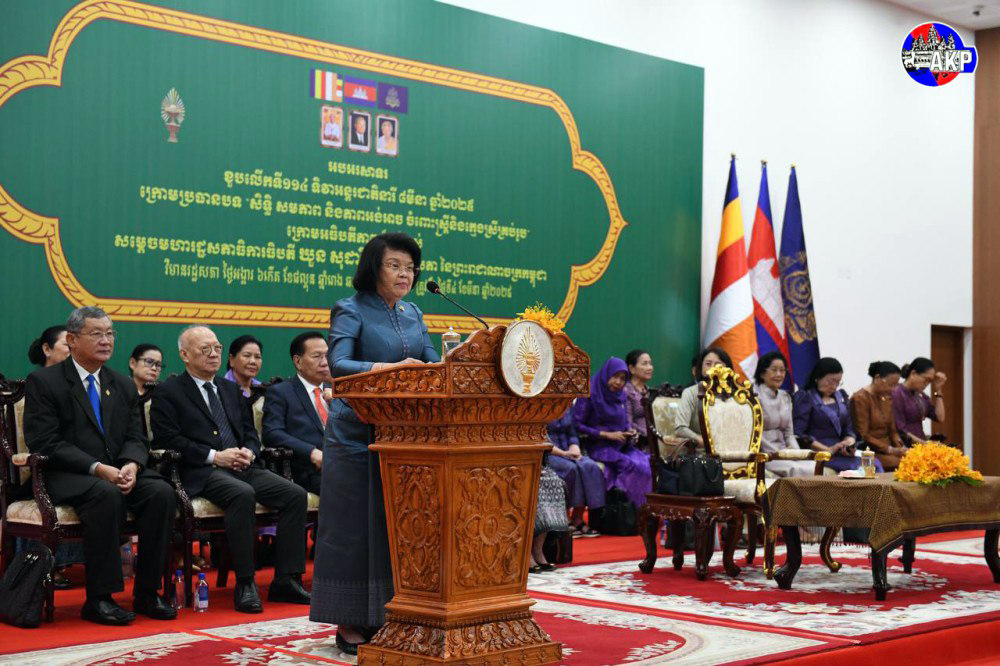
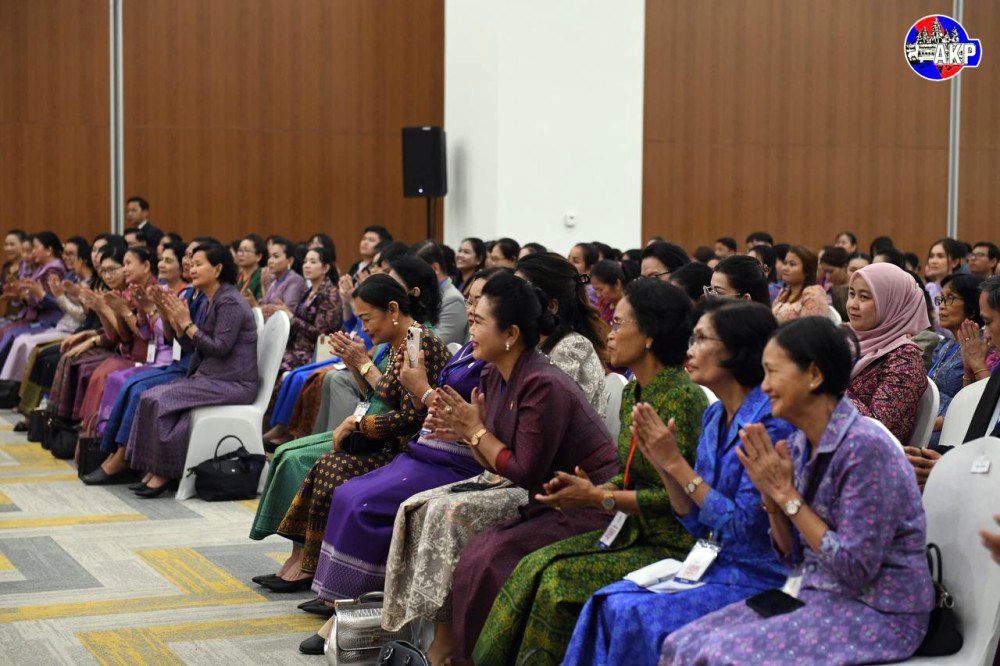
Samdech Maha Rathsapheathika Thipadei Khuon Sudary, President of the National Assembly, met Tuesday with 300 women led by H.E. Dr. Ing Kantha Phavi, Minister for Women's Affairs to mark the International Women’s Day.
The meeting with women from 15 national and sub-national institutions came ahead of International Women's Day on Saturday under the theme of Rights, Equality, and Empowerment for All Women and Girls.
In an address, Samdech Khuon Sudary highlighted the numerous achievements of the Royal Government of Cambodia and Parliament in promoting gender equality through laws, legal standards, and policy programmes.
She made ten recommendations to stakeholders to continue advancing gender equality in Cambodia by:
1. Continuing to implement the Neary Rattanak VI plan (2024-2028), focusing on gender transformation as the core;
2. Promoting social morality and the values of Cambodian women and families by enhancing inter-ministerial mechanisms, institutions, and multi-sectoral measures, as well as implementing positive-parenting and child-education programmes;
3. Encouraging women's participation in political and public life through capacity-building initiatives and policies that support women taking on leadership roles across all sectors and levels;
4. Expanding programmes aimed at women's economic empowerment, including support for women entrepreneurs and initiatives that help women access resources, markets, and training;
5. Ensuring that all girls have access to quality and timely education and health services, particularly those in remote and underserved areas, and supporting initiatives that empower women in health and family-planning decisions;
6. Implementing gender-responsive budgeting and monitoring systems in all government policies and programmes, ensuring that gender equality is integrated into planning and resource allocation across all levels and priority sectors;
7. Promoting media campaigns and community programmes aimed at changing social attitudes towards women and girls, and educating the public to end violence against them;
8. Encouraging and creating opportunities for women and girls to participate in science, technology, engineering, and mathematics (STEM) by raising public awareness, cultivating interest, and developing supportive ecosystems;
9. Enhancing digital literacy for women and girls and supporting them in having a stronger voice and greater presence in the digital ecosystem; and
10. Empowering women to participate in climate-change planning, policy development, implementation, and gender considerations in climate-change adaptation and mitigation.
By Chea Vannak