KH
KH  FR
FR  AR
AR CN
CNAustralia Supports International Fish Passage Conference in Siem Reap
AKP Siem Reap, February 05, 2025 --
Water and fisheries experts from Australia and Southeast Asia gathered in Siem Reap Wednesday for the 2nd Lower Mekong Fish Passage Conference.
Sponsored by the Australian Centre for International Agricultural Research (ACIAR) and the Australian Department of Foreign Affairs and Trade, the event aims to address challenges facing the Mekong River Basin while promoting sustainable fisheries and environmental conservation.
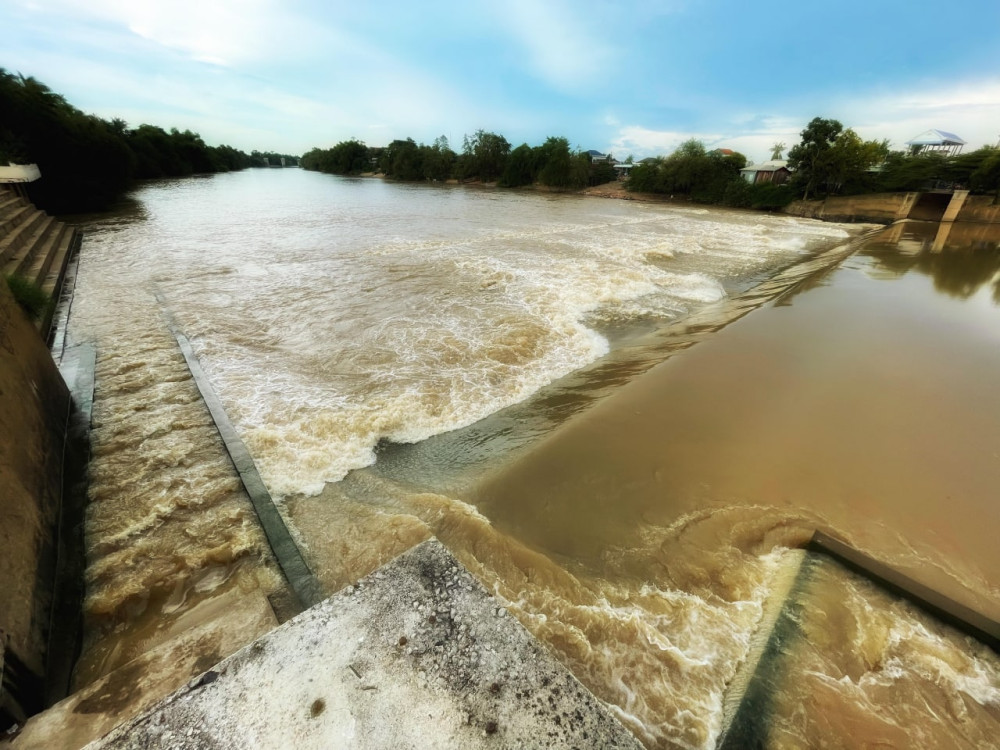
For over a decade, ACIAR has supported Charles Sturt University and collaborated with partner governments agencies in the Mekong region to restore fish populations. This effort includes the development of fish passages, commonly known as fish ladders or fishways.
With this support, 8 fishways have been built in Cambodia and Laos. These fishways allow freshwater fish to bypass barriers such as dams and weirs, enabling them to continue migrating to breeding, nursery, and feeding grounds. This migration is vital for isolated communities that rely heavily on fish for food, nutrition, and income security.
“Balancing the needs of sustainable development with the health of ecosystems is more crucial than ever for the Mekong River Basin,” said Lee Baumgartner, Charles Sturt University (CSU), who has led ACIAR-funded research efforts since 2010.
“This conference provides a collaborative opportunity for sharing insights and strengthening partnerships to ensure food security and sustain the livelihoods of millions who rely on the Mekong,” Baumgartner said.
The conference will also contribute to the scaling up of innovations through partnerships and investments that address shared challenges.
ACIAR is facilitating the expansion of this work beyond Mekong countries. In April, Indonesia will open a fish passage near Jakarta at Kertamukti Dam, implementing new sustainable policies.
“By integrating fish passages into regional planning, we can prevent ecological damage across the Lower Mekong Basin, protect fisheries essential for food security and income, and strengthen community resilience and environmental sustainability,” said Professor Wendy Umberger, CEO at ACIAR.
Collaborations in scientific research, facilitated by ACIAR and CSU, have strengthened local capacity and provided valuable research insights. This has enabled relevant stakeholders to make informed decisions that promote positive long-term outcomes for local fisheries, water management, and the economy.
By Sao Da