KH
KH  EN
EN  AR
AR CN
CNGovernment Studying Canal Project Linking Upper Mekong River to Tonle Sap Lake
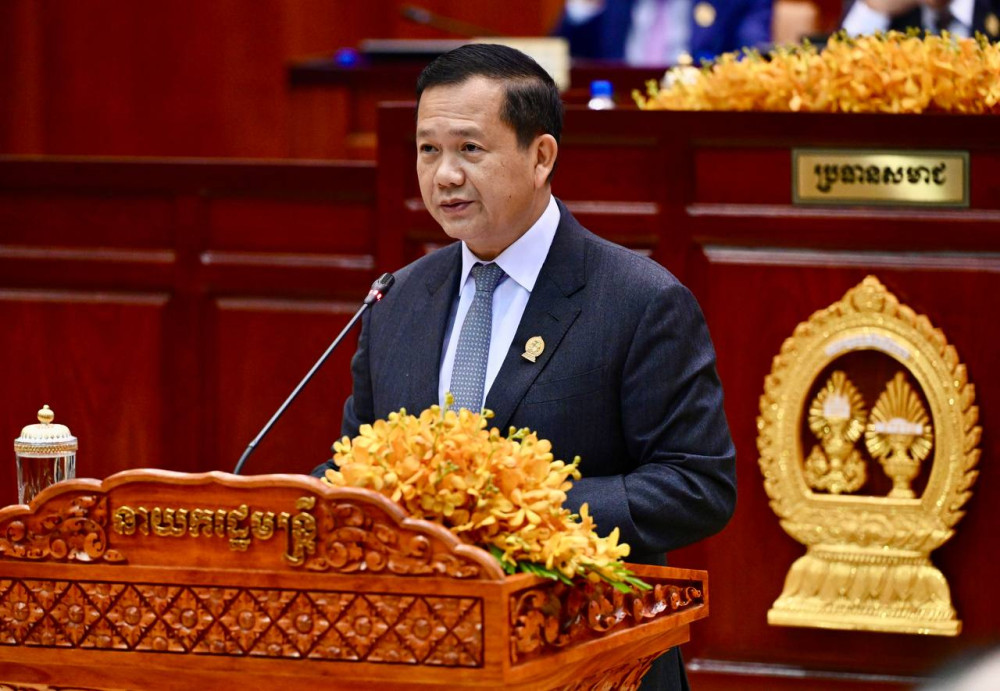
AKP Phnom Penh, June 03, 2025 -- Prime Minister Samdech Moha Borvor Thipadei Hun Manet has confirmed that the Royal Government is studying the feasibility of constructing a canal to connect the Upper Mekong River to the Tonle Sap Lake.
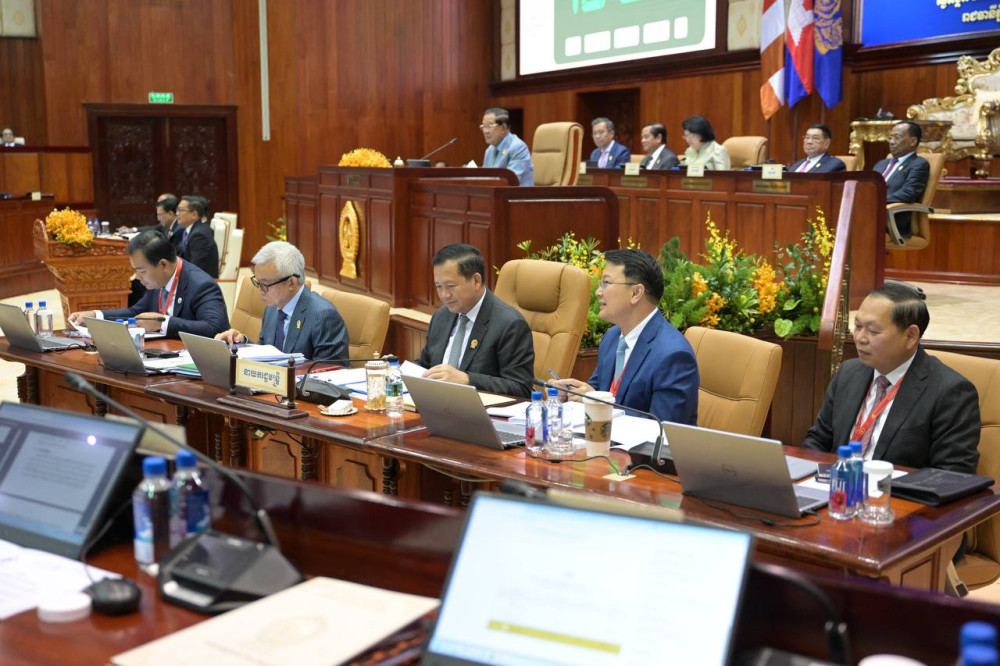
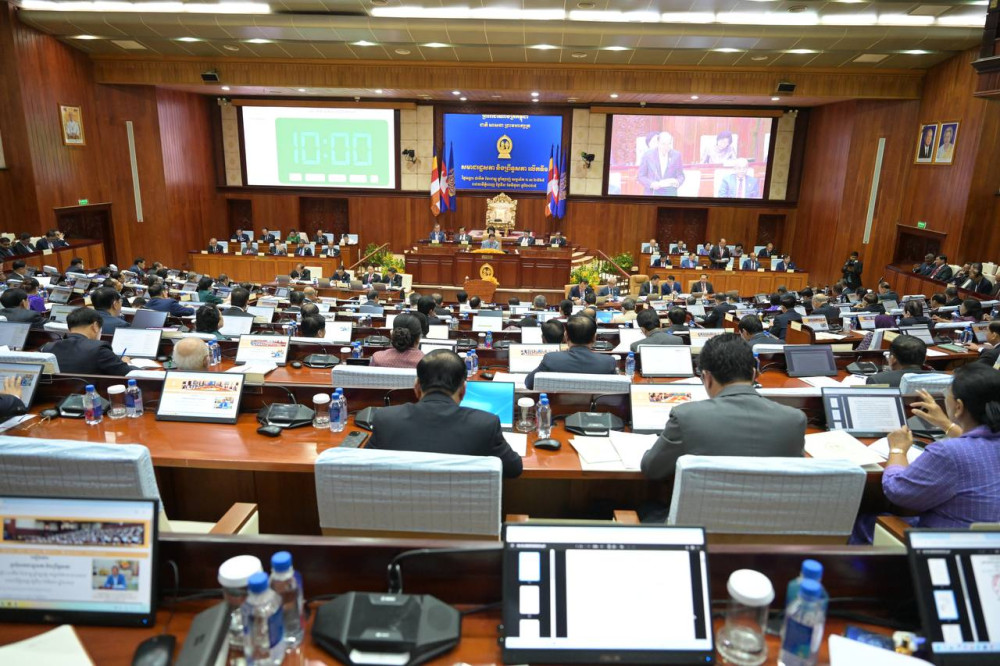
“I have instructed the Ministry of Water Resources and Meteorology to collaborate with the Korean government through KOICA (Korea International Cooperation Agency) on a feasibility study for building a canal from the Upper Mekong River to Stung Sen, and then to the Tonle Sap Lake,” the Premier said during the National Assembly-Senate Congress on June 3. “The aim is to ensure water balance in the agricultural sector and to support transportation.”
Samdech Thipadei added that in the future, there could be potential to extend the canal from Tonle Sap Lake to an area near Poipet to further enhance transportation infrastructure. “If the Funan Techo Canal is built, our waterway transport system will become even more vital,” he emphasised.
At this stage, he noted, it is essential to conduct environmental and technical studies to assess the feasibility of linking the Upper Mekong River in Stung Treng province to Stung Sen, a distance of approximately 70 kilometres. If successful, the project would help balance water distribution between the Mekong River and Tonle Sap Lake, while also strengthening the country’s irrigation and water supply systems.
According to H.E. Thor Chetha, Minister of Water Resources and Meteorology, Cambodia currently has over 2,000 small-, medium-, and large-scale irrigation systems spanning approximately 70,000 kilometres. The country also maintains eight major reservoirs with capacities ranging from 20 million to 400 million cubic metres—excluding more than 1,600 small reservoirs. Together, these systems store around 4,000 million cubic metres of water, not including volumes from the Mekong River and Tonle Sap Lake. These resources serve not only agriculture but also multiple other sectors, including industry, clean water and contruction.
By C. Nika